
Pyramid Chart
The Pyramid Chart is a triangle diagram that allows you to make proportional comparisons between values showcased in a progressively increasing manner. It consists of various segments, each representing a data point.
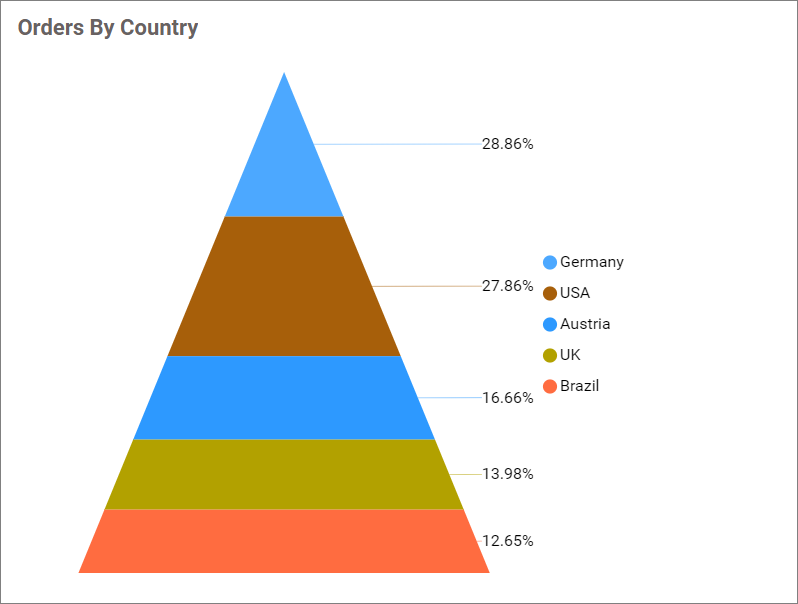
How to configure table data in the Pyramid Chart
The Pyramid Chart needs a minimum of one value element and one column element to showcase. The measure or expression field that you want to analyze can be dropped into the Values block. The dimension for which you want to categorize the measure can be dropped into the Columns block. To categorize the measure based on a series, drop the respective dimension into the Rows block.
To configure data in the Pyramid Chart, follow these steps:
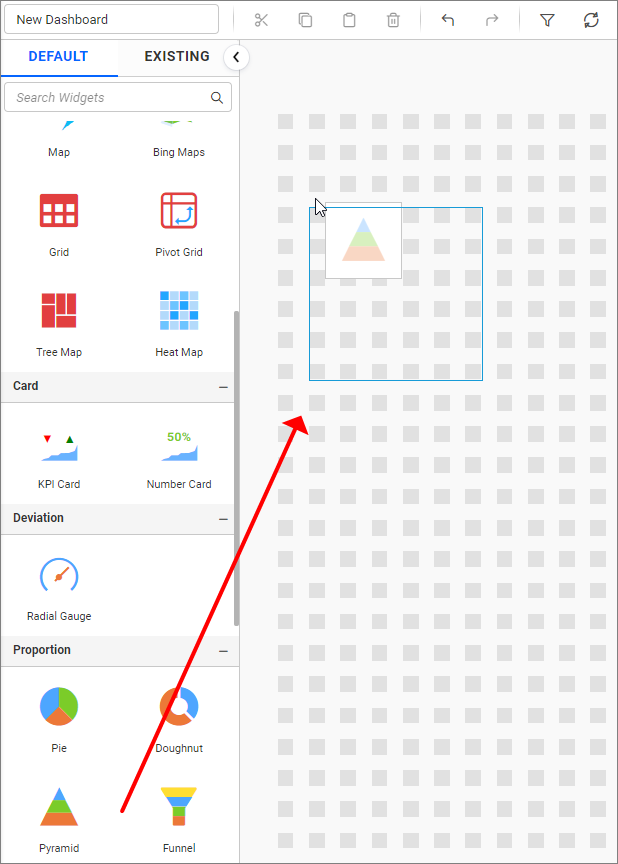
- Drag the Pyramid Chart into the canvas and resize it to your required size.
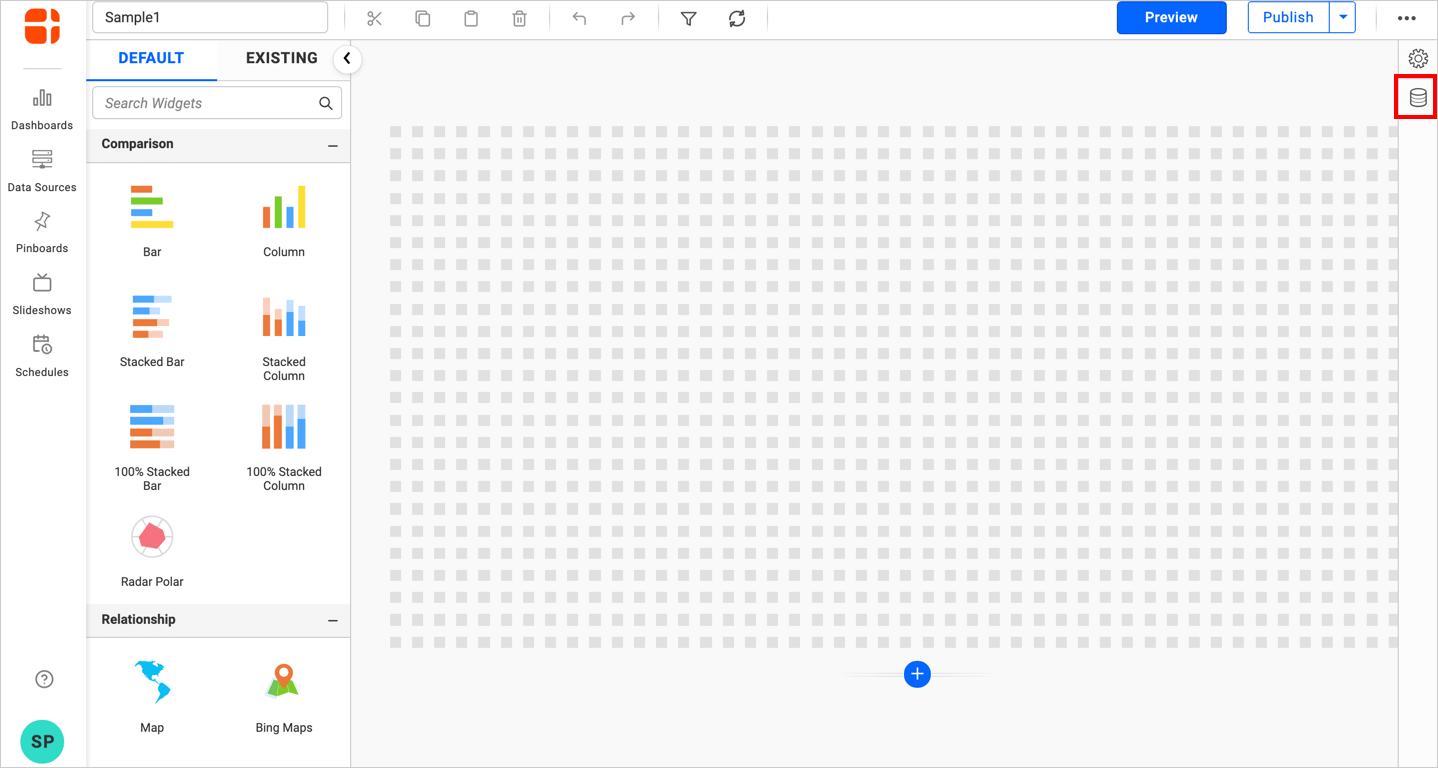
- Click the Data Source icon in the configuration panel.
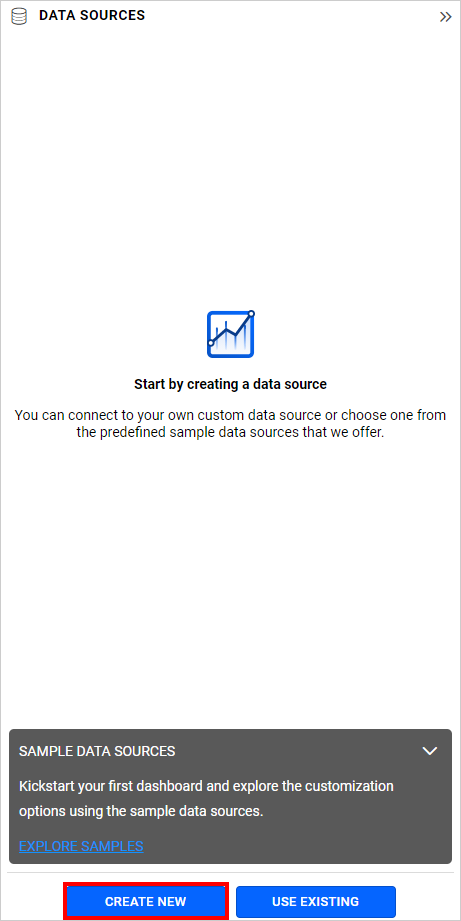
- Click CREATE NEW to launch a new connection from the connection-type panel.
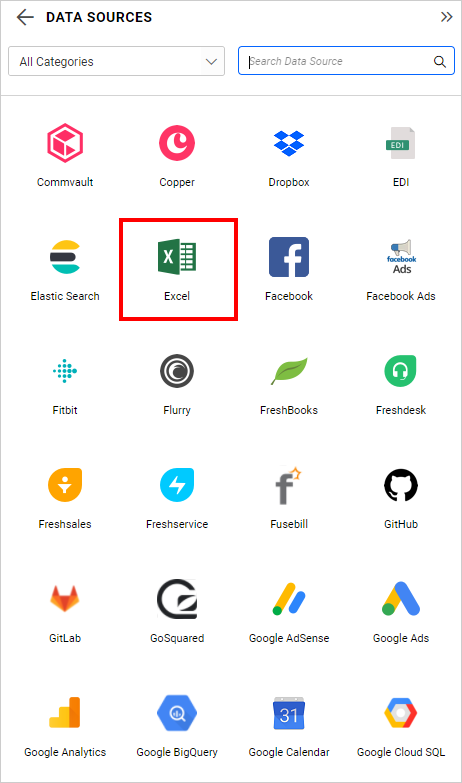
- In the connection-type panel, click any one of the listed connection type buttons shown. Here, the Microsoft Excel connection type is selected for demonstration.
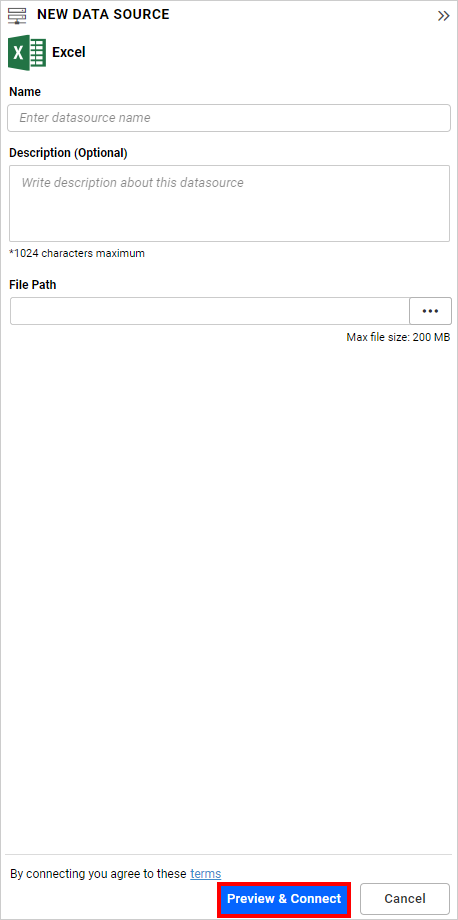
- In the NEW DATA SOURCE configuration panel, choose the file path and click Preview & Connect.
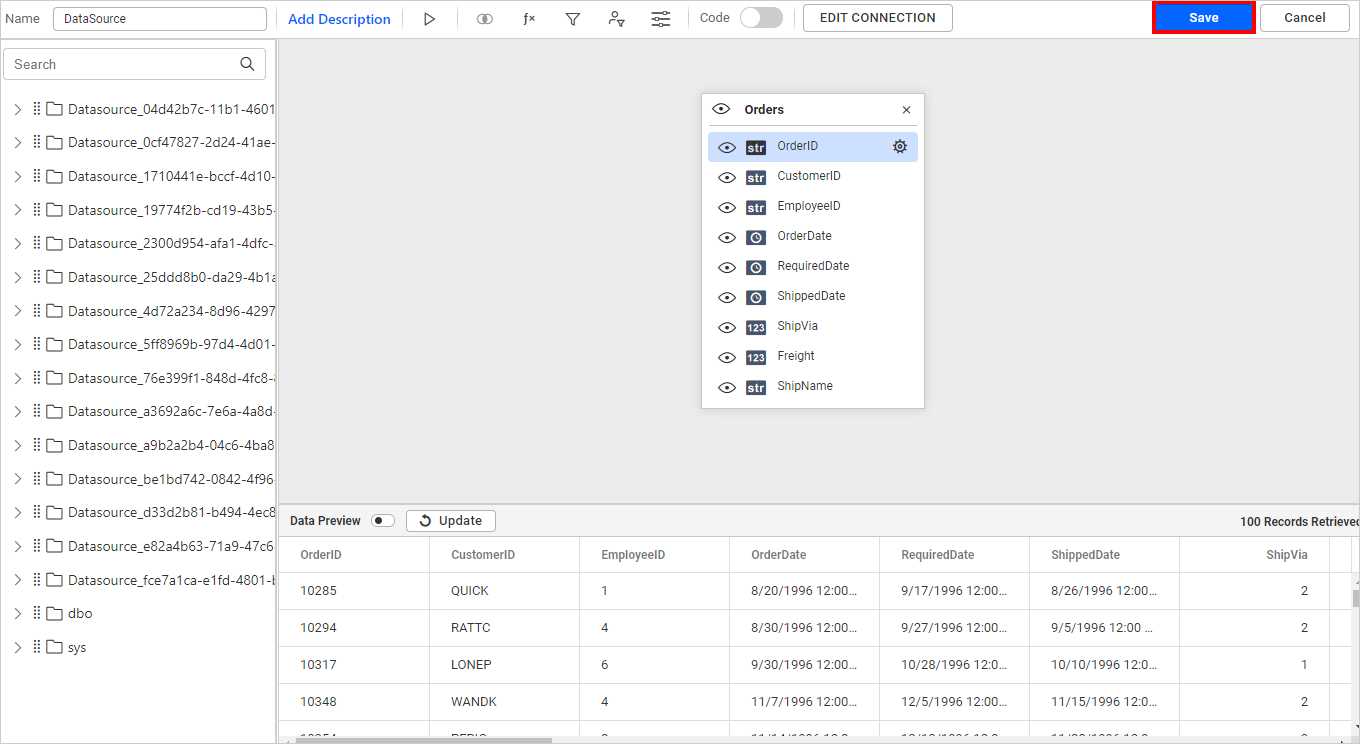
- Drag your preferred table or view from the left pane from the data design view and click Save.
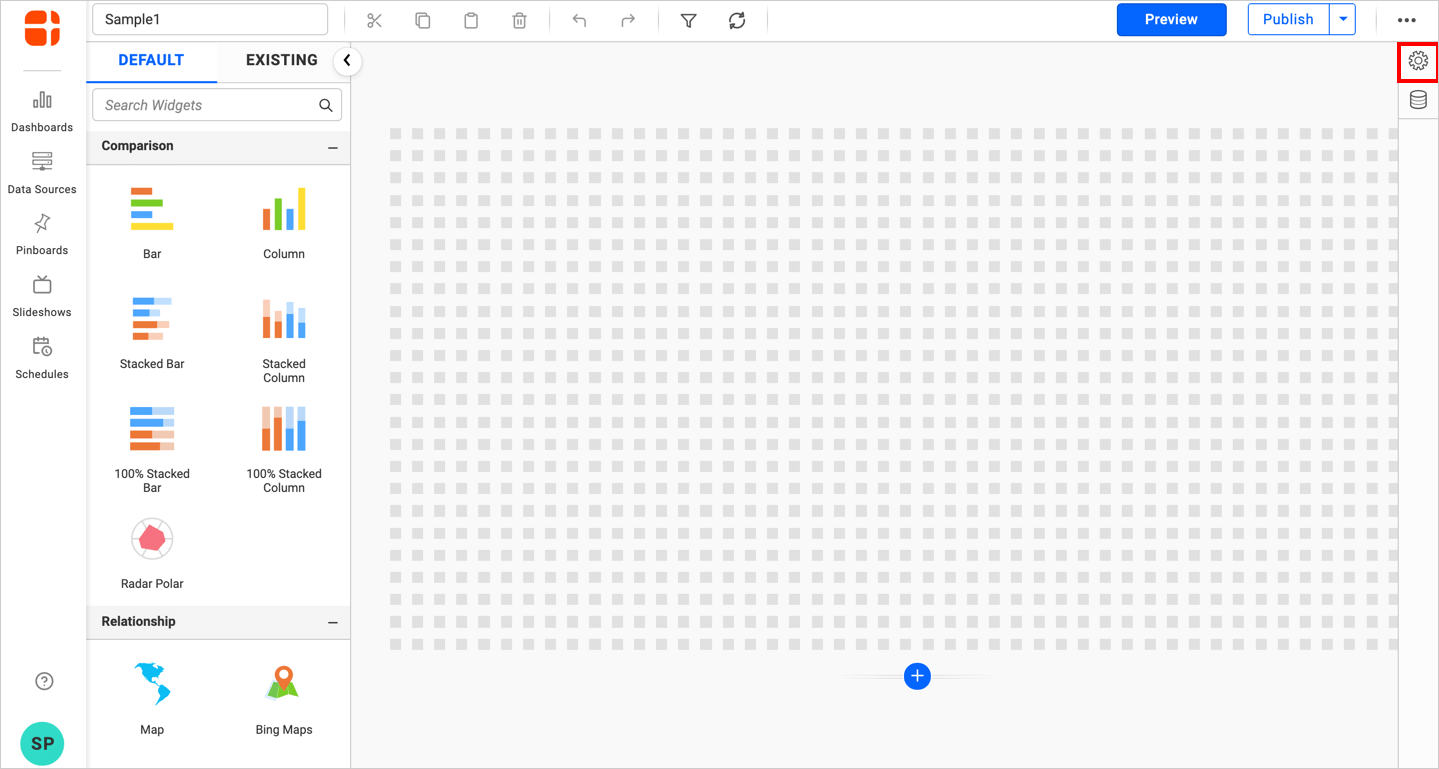
- Click the Properties icon in the configuration panel. The property pane opens.
- Now, switch to the ASSIGN DATA tab.
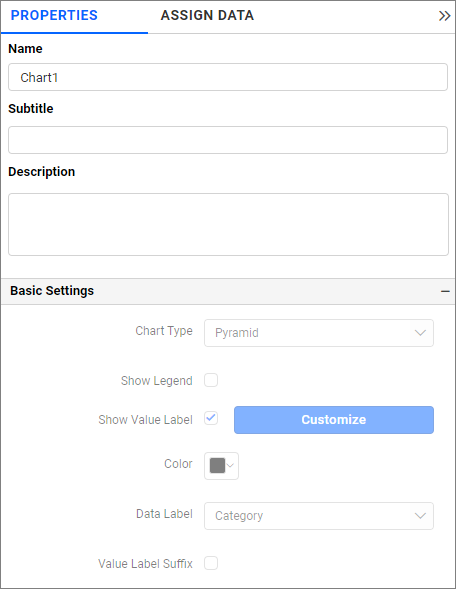
- The ASSIGN DATA tab will be opened with the available measures and dimensions from the connected data source.
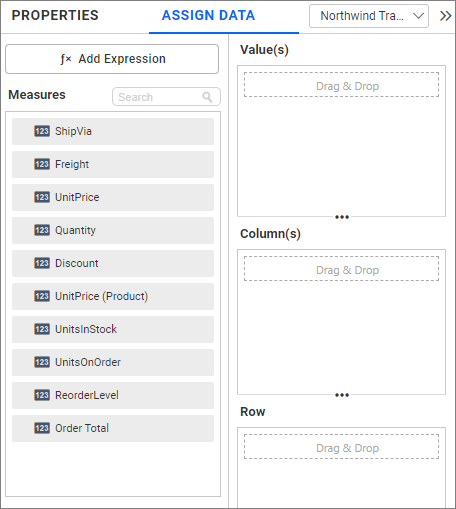
- You can add the required data from measures and dimensions to the required field.
Adding value(s)
You can add more than one data from the Measures section to the Value(s) field by dragging the required data.
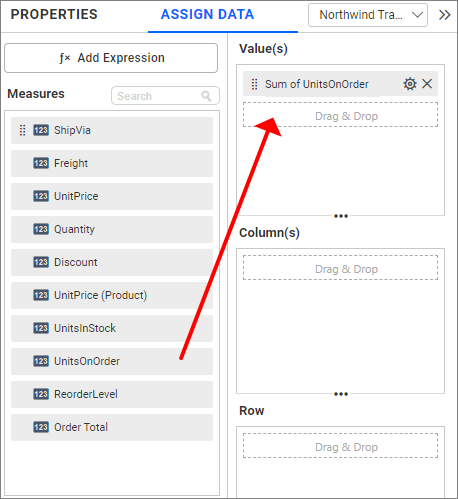
Settings
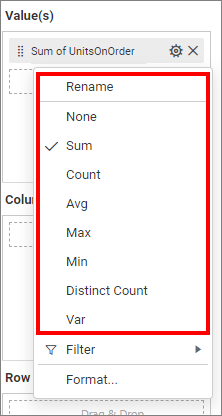
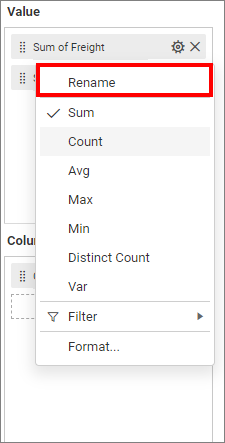
Click Settings to change the name by using the Rename option and required summary type from the available summary types shown in the settings.
Filtering data
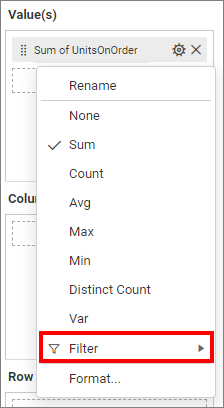
You can filter data displayed in the Pyramid chart by using the Filter option. For more details, refer to the filter.
Formatting data
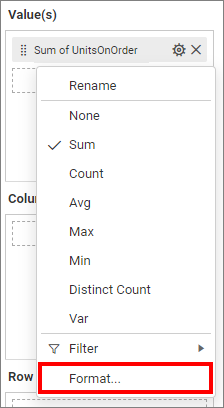
You can format the data displayed in the chart by using the Format option. For more details, refer to the measure format.
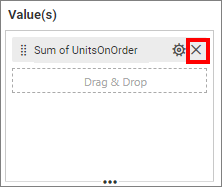
To remove the added value fields, click Remove.
Adding columns
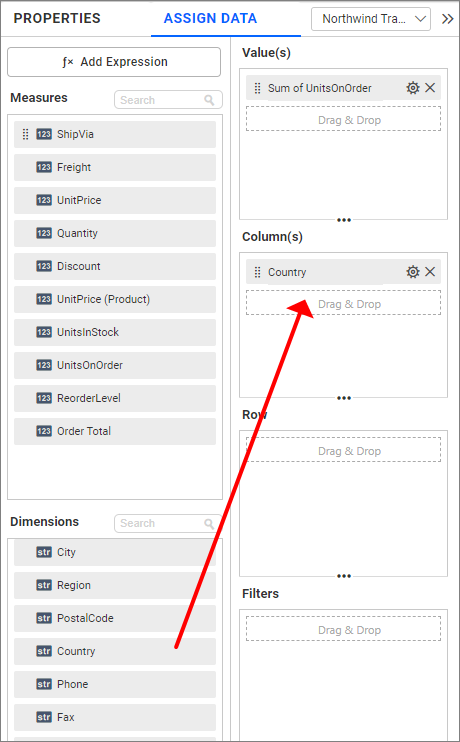
You can add data from the Dimensions field into the Columns field.
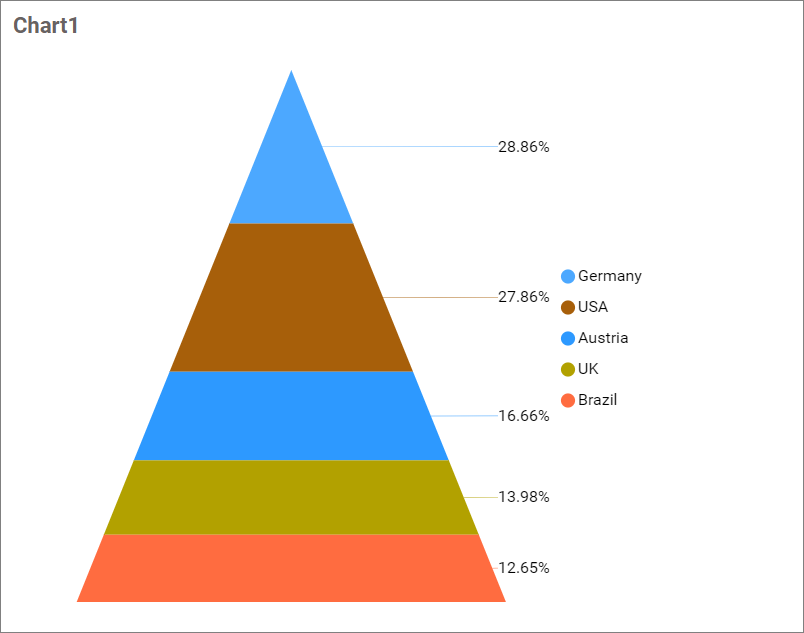
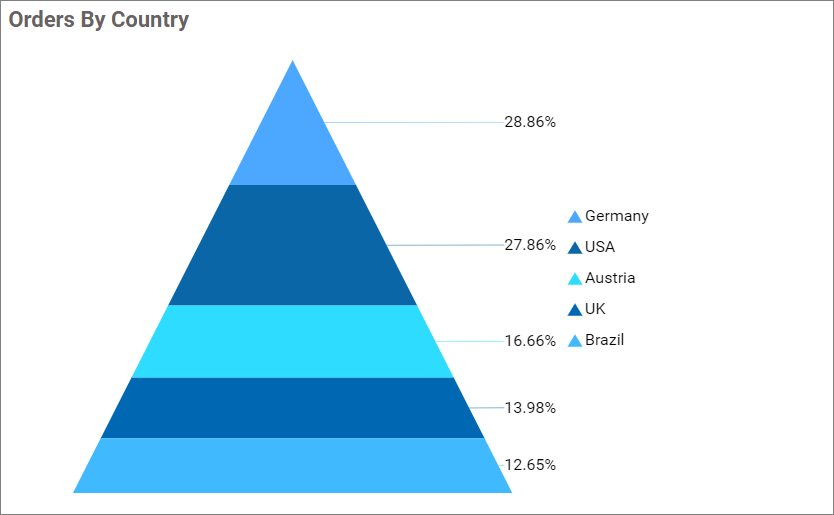
The Pyramid chart will be rendered as follows.
You can change the settings.
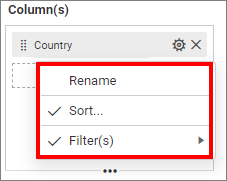
Renaming fields
The configured field names can be edited by using the Rename option provided in the settings menu.
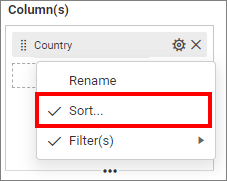
Sorting data
You can sort the dimension data using the Sort option under the Settings menu list. To apply sorting for the data, refer to the Sort.
Filtering data
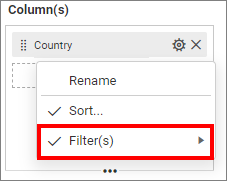
You can apply a filter by selecting the filter option in settings. For more details, refer to the filters.
NOTE: By default, the filter will be set for the top 5 records.
Similarly, you can add the Measures and Expression Columns into the Column field.
Multi Level Drill Down
Add more than one Dimension field into the Columns field. The alert message will open.
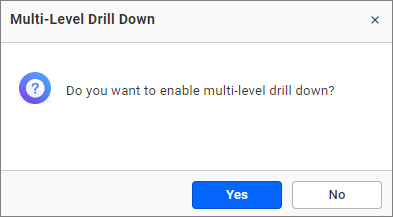
You can enable this option to get further details about the selected chart region. To enable drill down, click Yes.
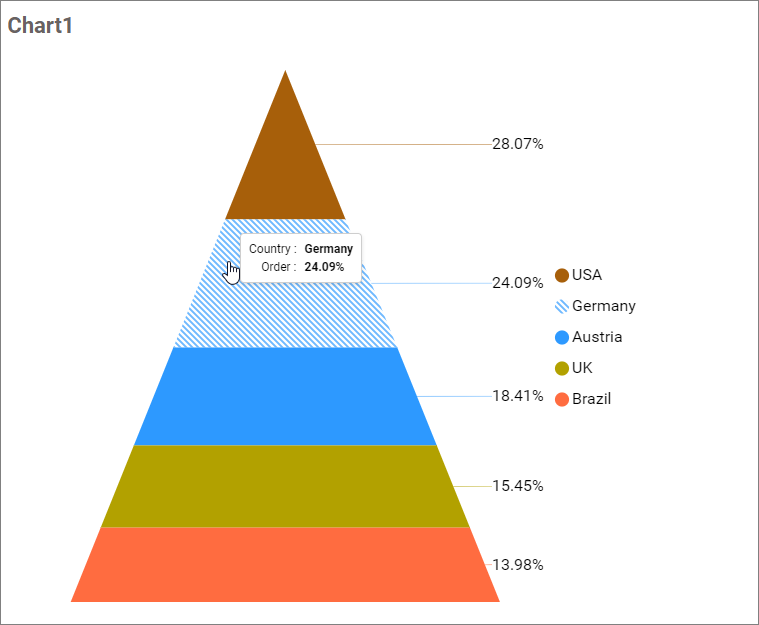
NOTE: If you click No, a single value will be added to the columns field.
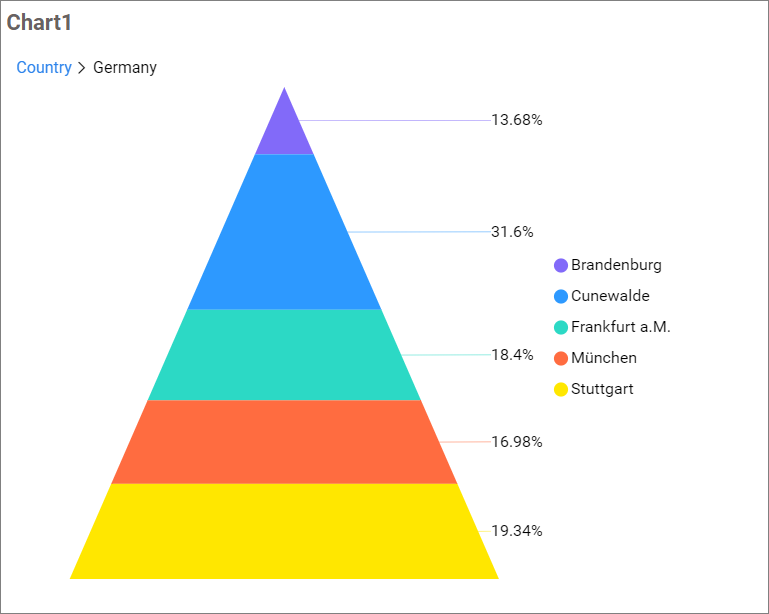
The drilled-down view of the selected chart region will be as follows.
Hidden Column
Hidden columns are useful in cases where we don’t want the fields to take part in the visualization, but only to be used for linking, filtering, and view data.
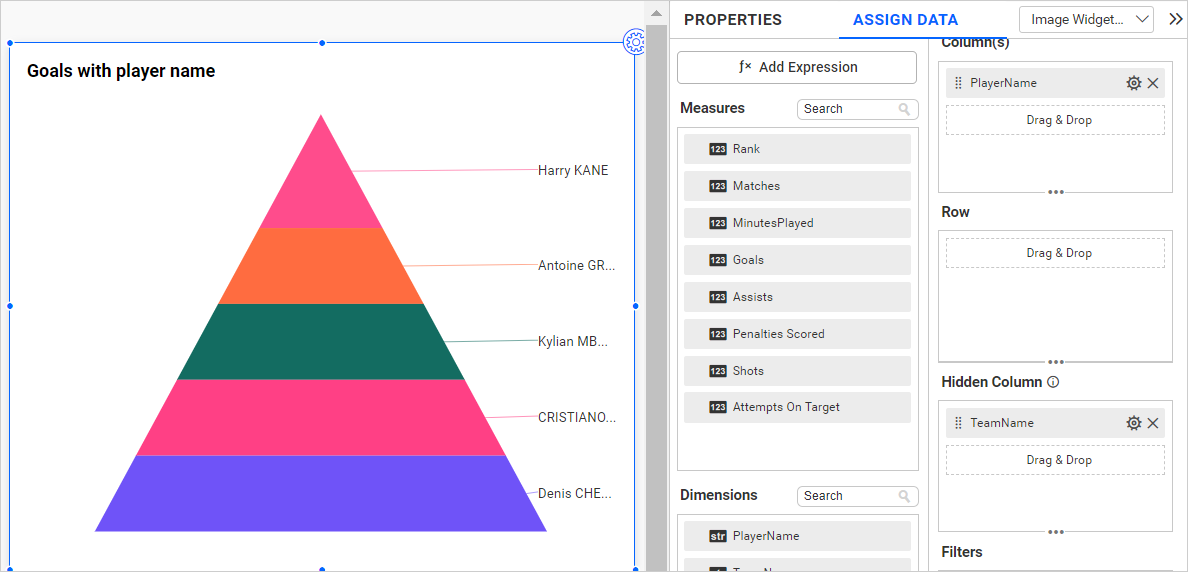
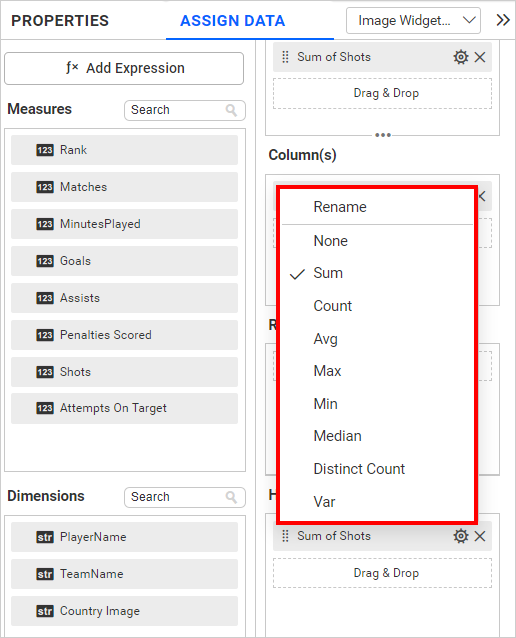
We can configure both measure and dimension fields into the hidden column. For measure, we will be having all the settings have for the measure fields except formatting and filtering.
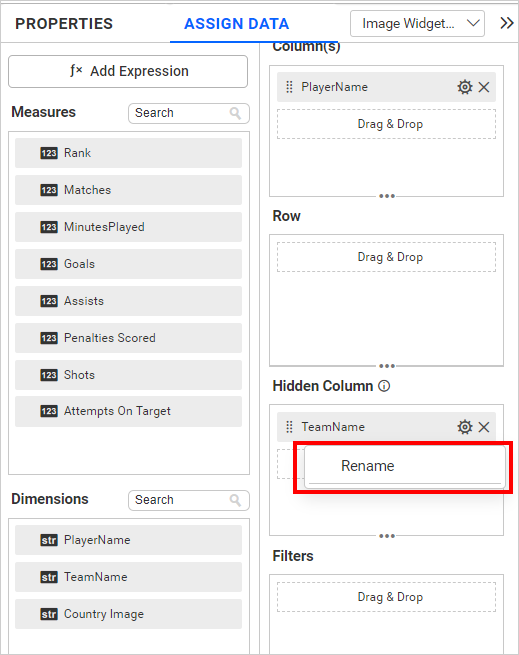
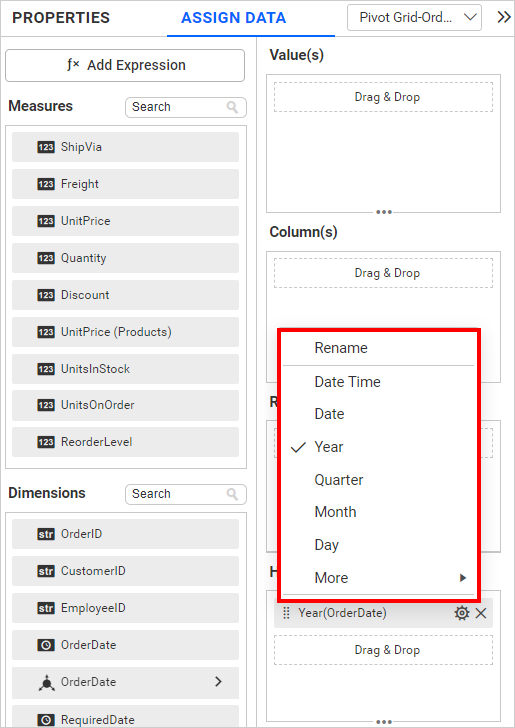
In the case of dimension fields, we will have the following options only. In Date fields, we will have all available types except sorting, relative date filter, settings, and filters.
Linking
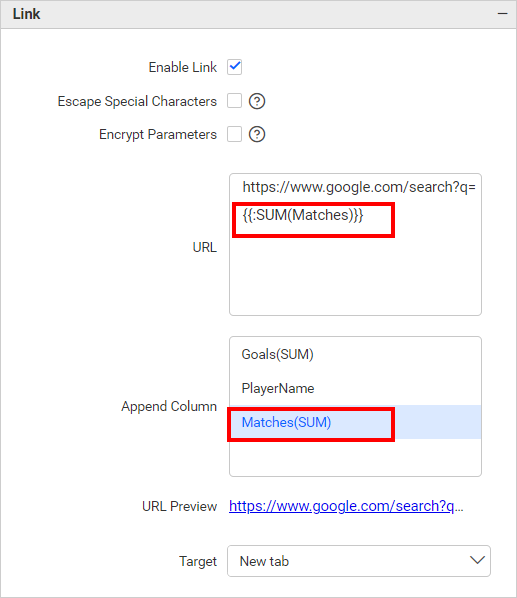
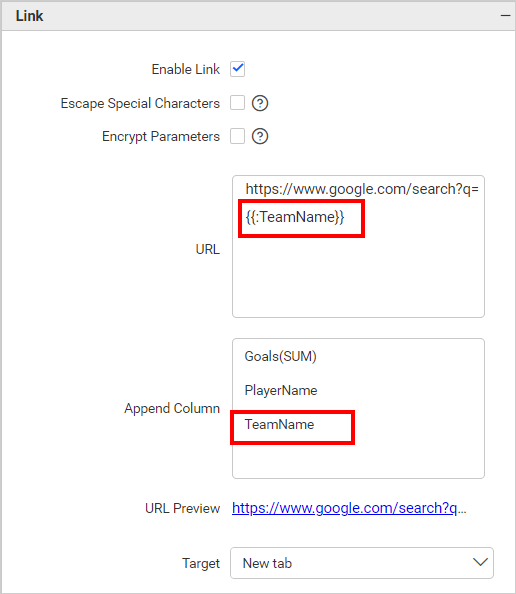
The primary use case of the hidden columns is linking. On configuring hidden columns, we can see below that the fields configured in hidden columns are listed in the linking section. On configuring the column in linking we can pass the corresponding column value in linking parameter.
Measure Based Example: If we wish to pass the number of Matches played as a URL parameter but do not want it to influence the visualization, we can configure the Matches in the hidden columns and incorporate them into the link.
Dimension Based Example: If we wish to pass the number of Team Name played as a URL parameter but do not want it to influence the visualization, we can configure the Team Name in the hidden columns and incorporate them into the link.
Filtering
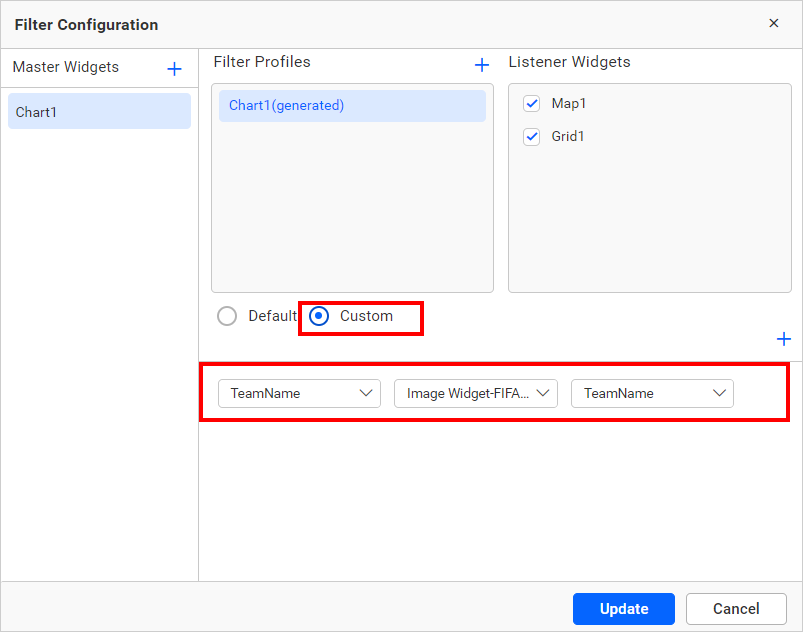
You can use hidden columns to filter data in the visualizations. Configure hidden columns and click the below filter icon.

Click the Custom button highlighted in the filter configuration dialog image below. It will list all the fields configured in the widget. Keep the field configured in the hidden column and remove the other fields, then click the Update button.
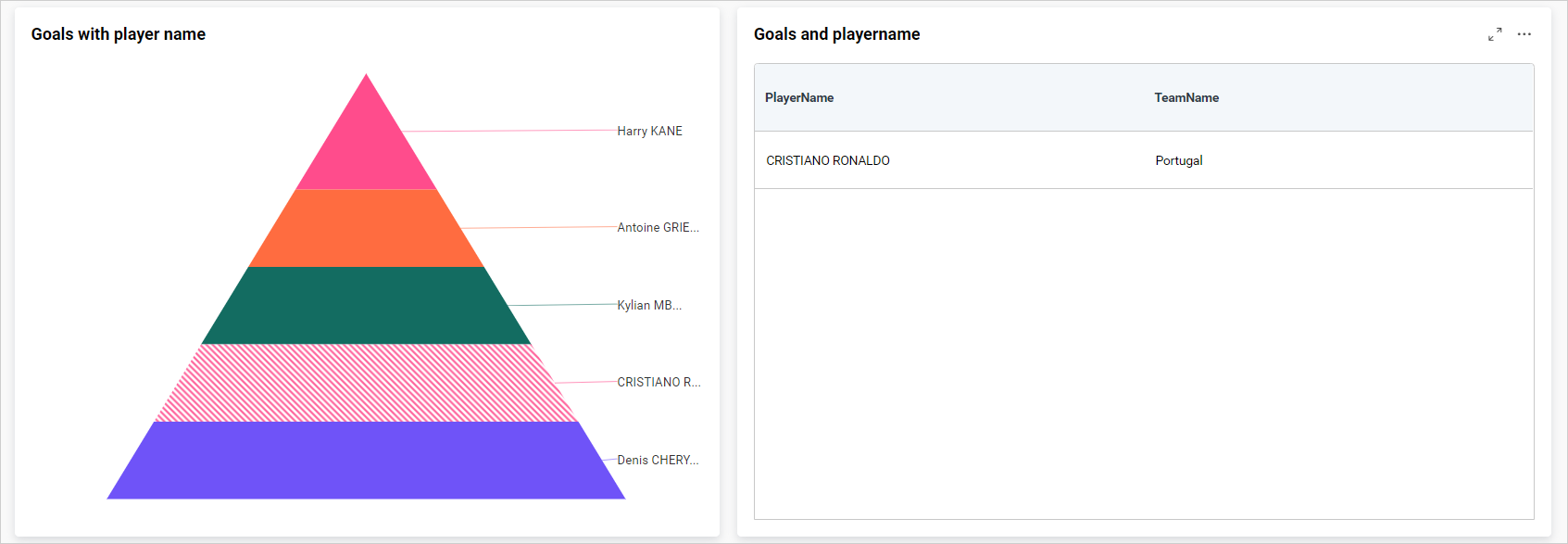
Now, we can see in the image below, the data is filtered based on the hidden column field instead of the actual column that we bound in the widget.
For more details about filtering the widget data, refer to the Cross Filter Configuration documentation.
View Data
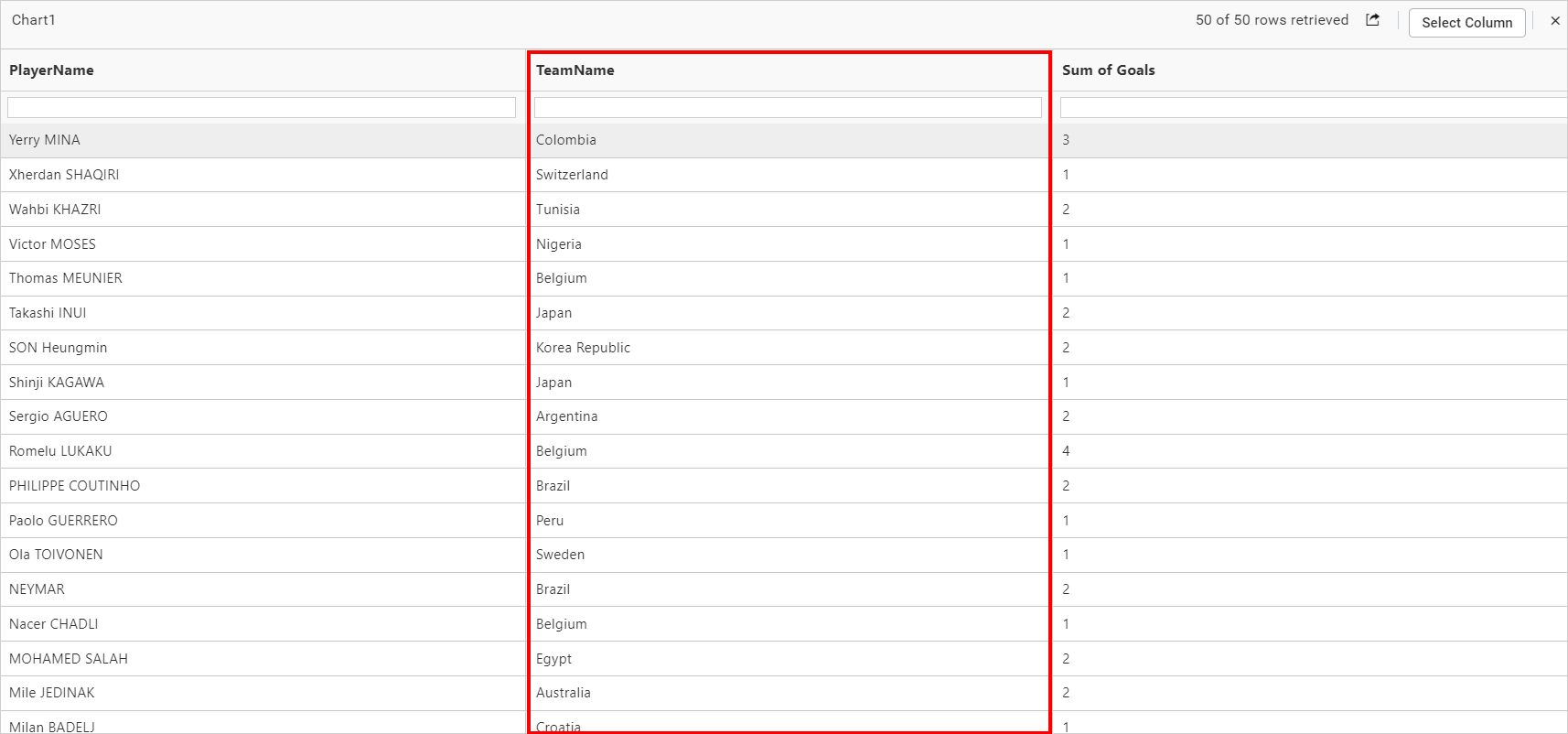
You can view the data in the hidden columns in the underlying data view. This is useful for checking the data in more detail and can help you to identify any issues with the data.
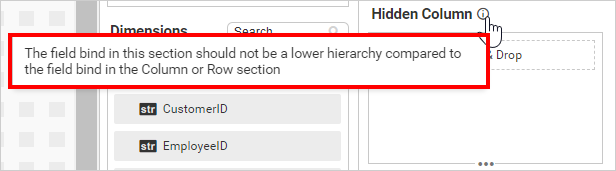
NOTE: We don’t recommend configuring lower hierarchy data in hidden columns as we can see in the info icon in
Hidden Columnsection denotes the same.
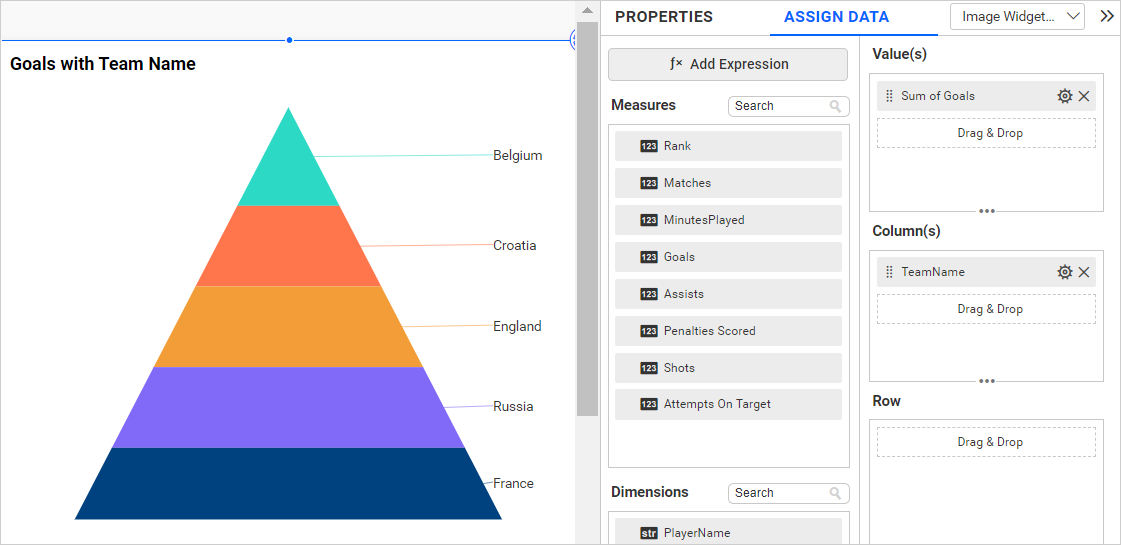
The below chart displays the goals by each team without hidden columns.
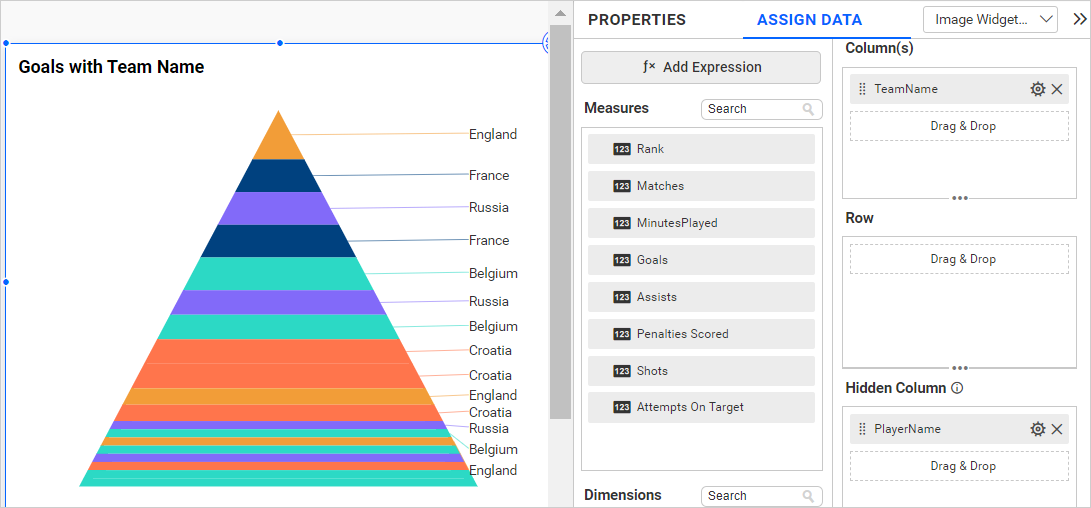
If we hide lower hierarchy data (Player Name) in columns compared to the column and row field data, the data in the widgets may appear duplicated. This can affect the visualization of the chart, as shown in the image below.
Adding rows
You can drag the Dimension section into the Rows field.
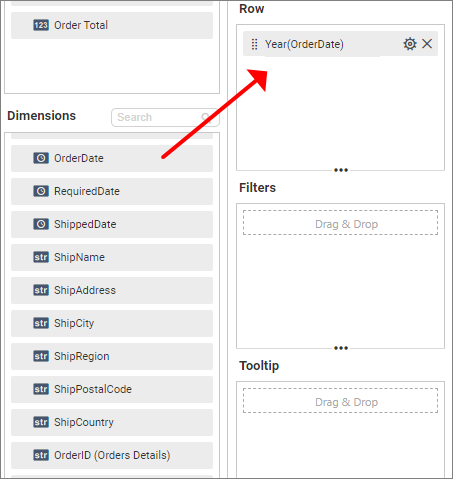
You can apply filter and sort options for the rows field, if required.
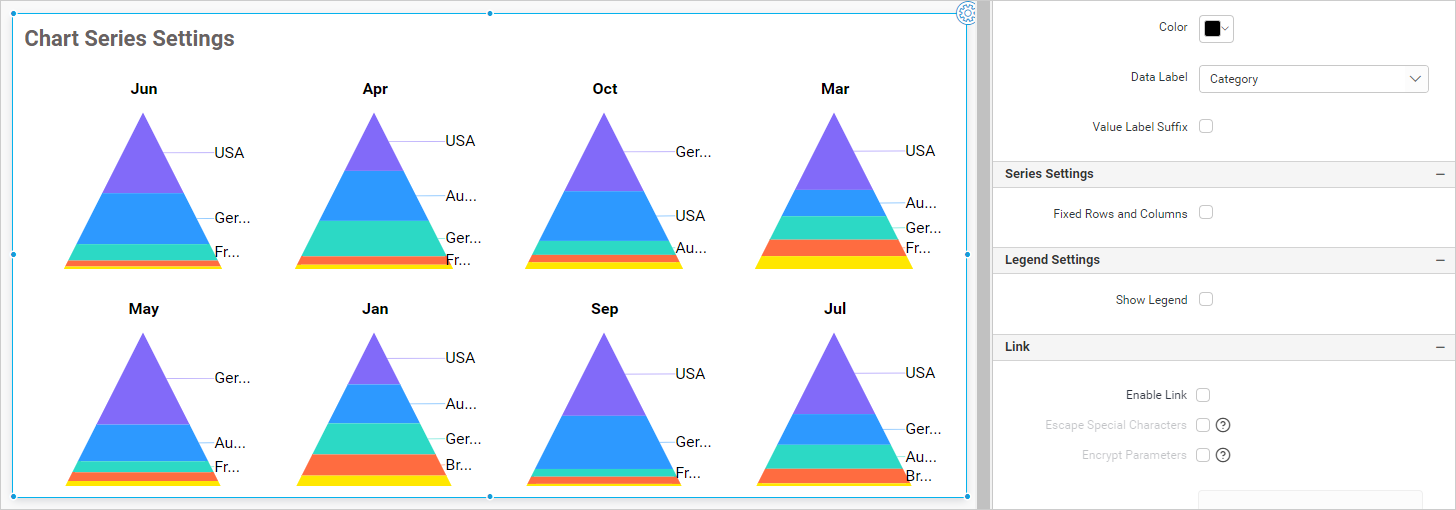
This will render a pyramid chart in the series.
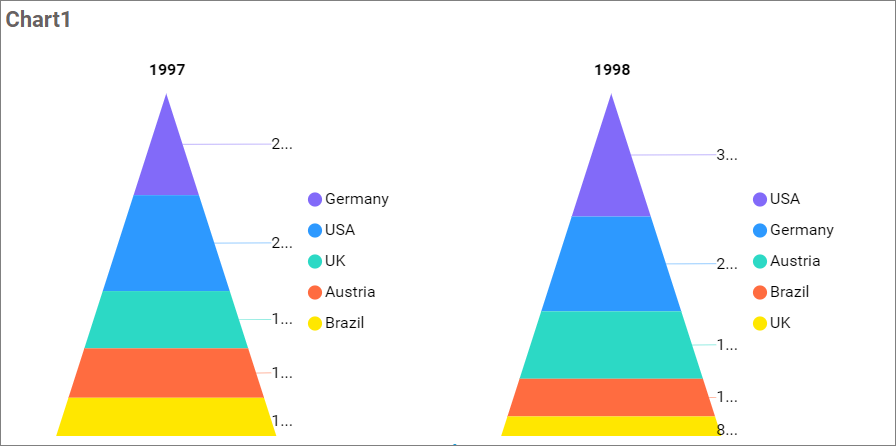
Scroll down to see all charts.
How to format a Pyramid Chart
You can format a Pyramid Chart for better illustration of the view by using the settings available in the Properties tab.
To configure data in the Pyramid Chart, follow these steps:
-
Drag the Pyramid Chart into the canvas and resize it to your required size.
-
Configure the data in the Pyramid Chart.
-
Focus on the Pyramid Chart and click the Widget Settings icon.
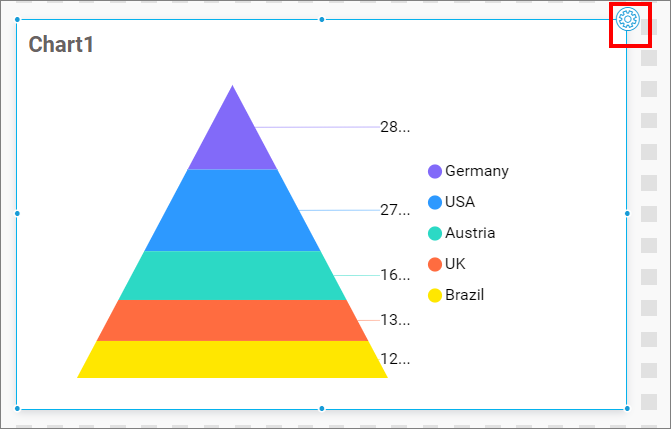
The property window will be opened as follows:
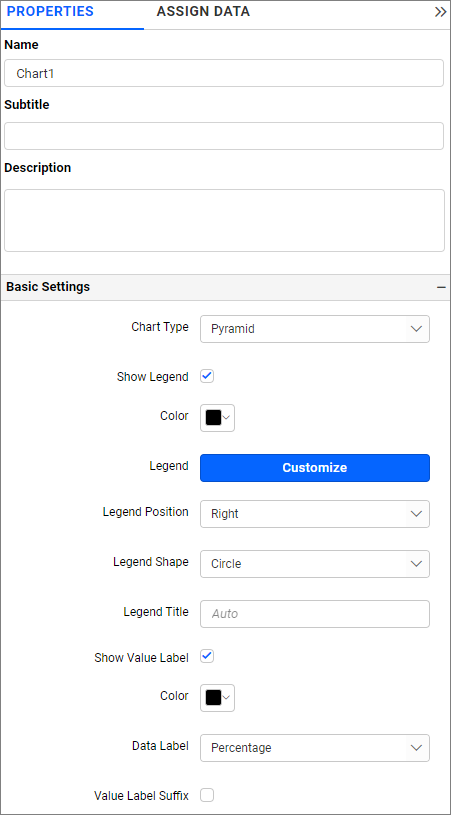
You can see the list of properties available for the widget with default values.
General settings
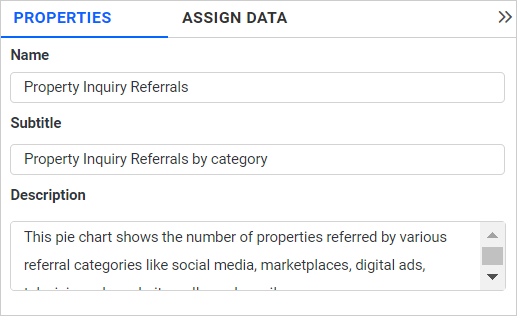
Name
Allows you to set a title for the Pyramid chart widget.
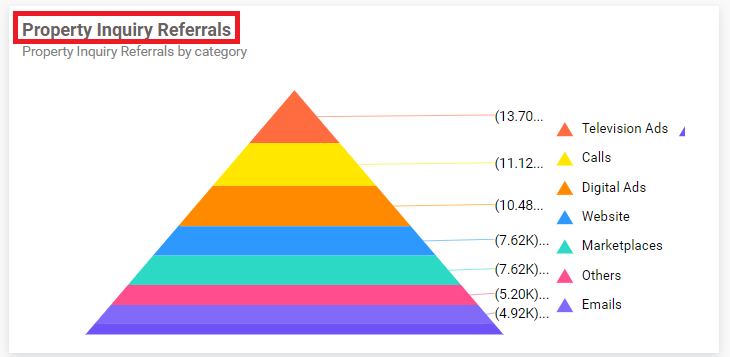
Subtitle
Allows you to set a subtitle for the Pyramid chart widget.
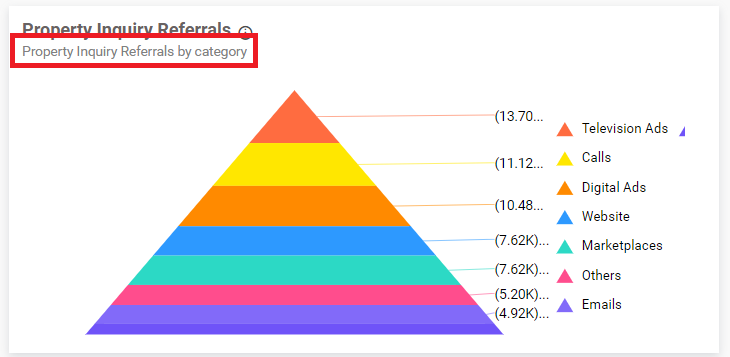
Description
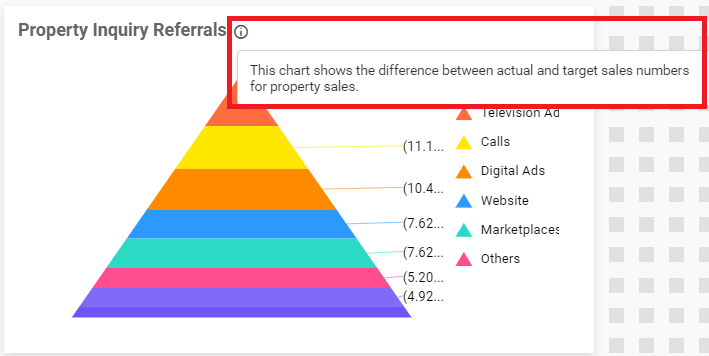
Set a description for the Pyramid chart widget whose visibility will be denoted by the i icon, and hovering over it will display the description in a tooltip.
Basic settings
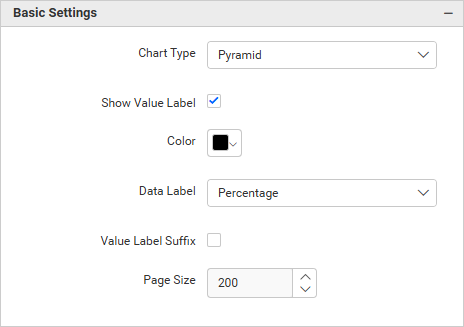
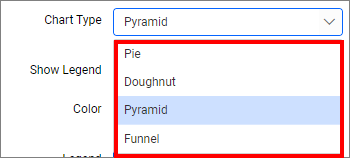
Chart type
Switch the widget view from the current chart type to another chart type.
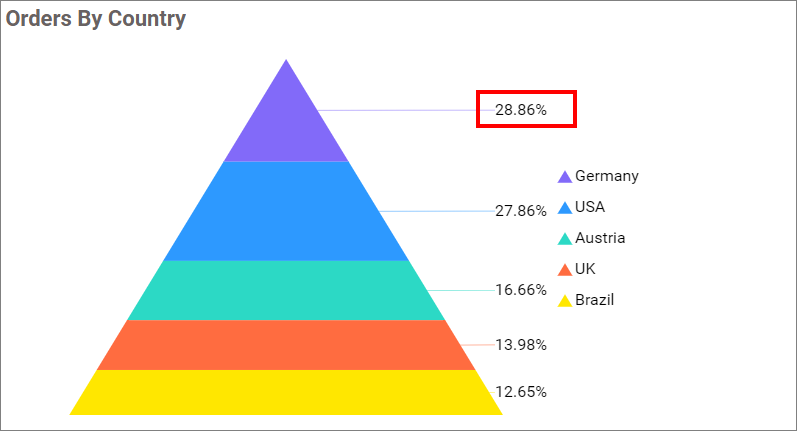
Show value labels
Toggle the visibility of value labels.
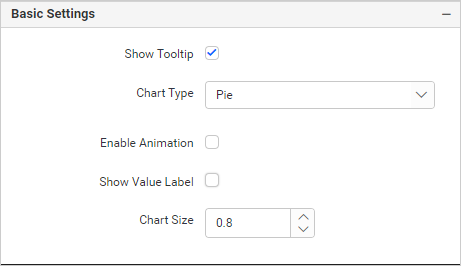
If you disable Show Value Labels properties, the dependent properties, which are color, Value label position, Value label rotation and Value label suffix will be hidden.
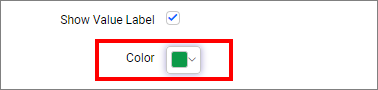
Value Label Color
Allow you to customize the value label’s color.
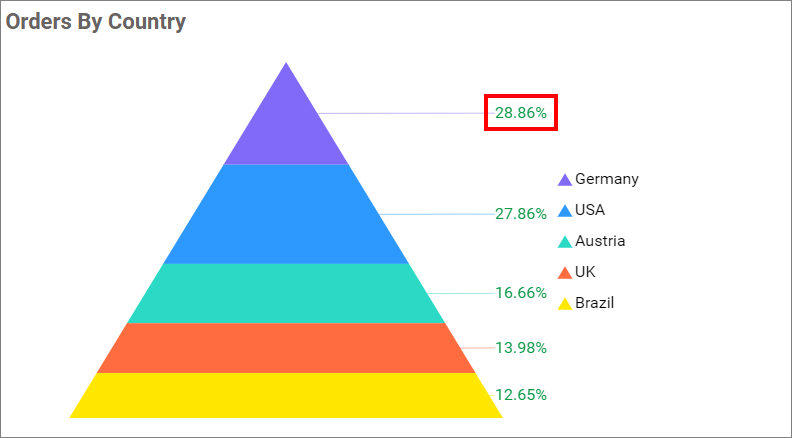
Data label value
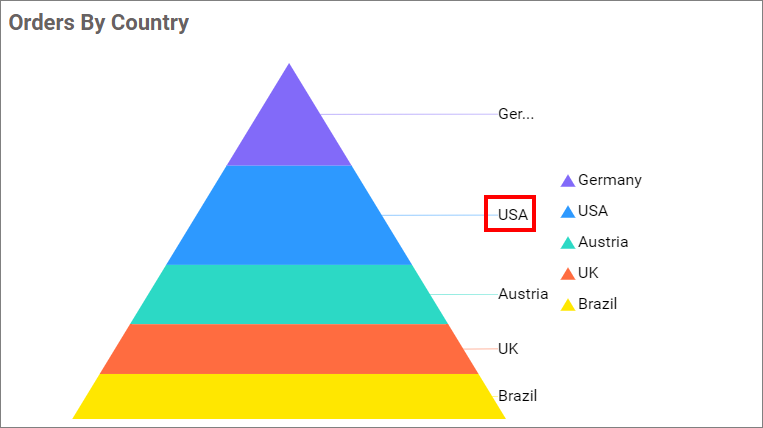
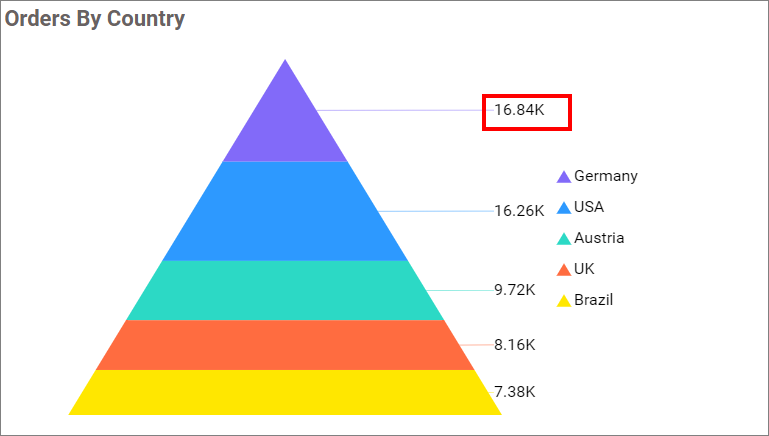
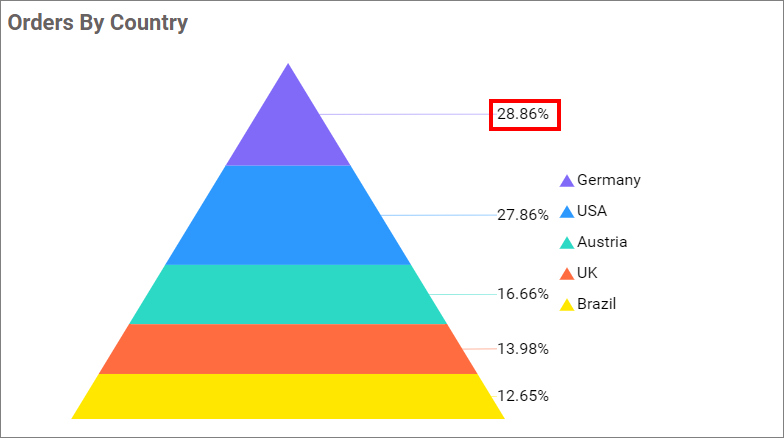
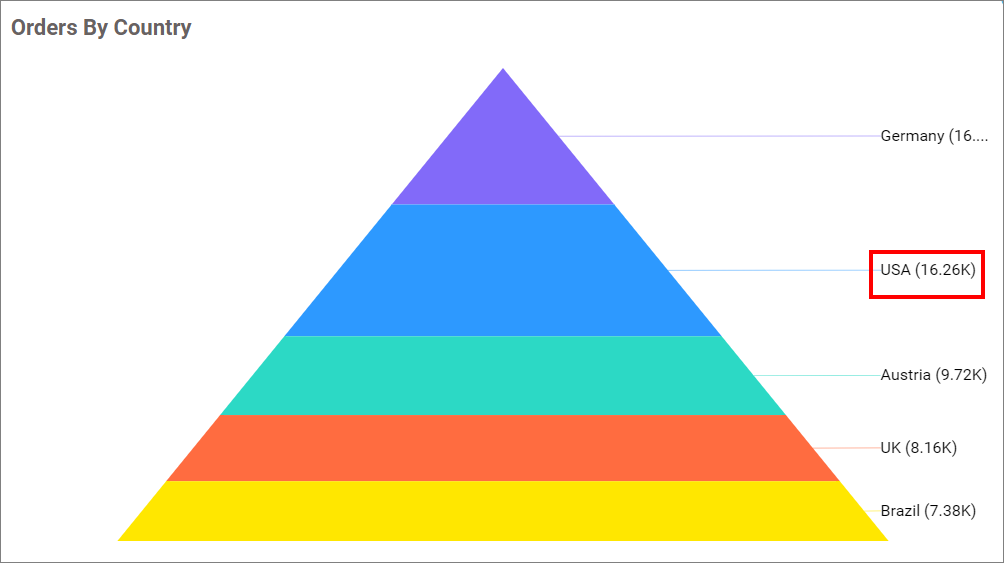
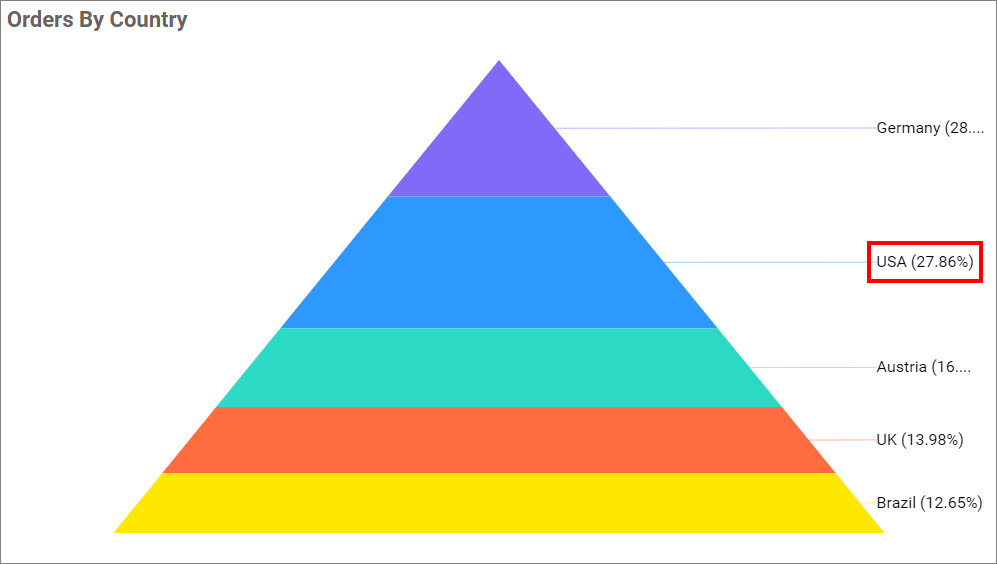
Defines the display format as a category, value, percentage, category and value, category and percentage, value and percentage, or all details.
Category
Value
Percentage
Category and value
Category and percentage
Value and percentage
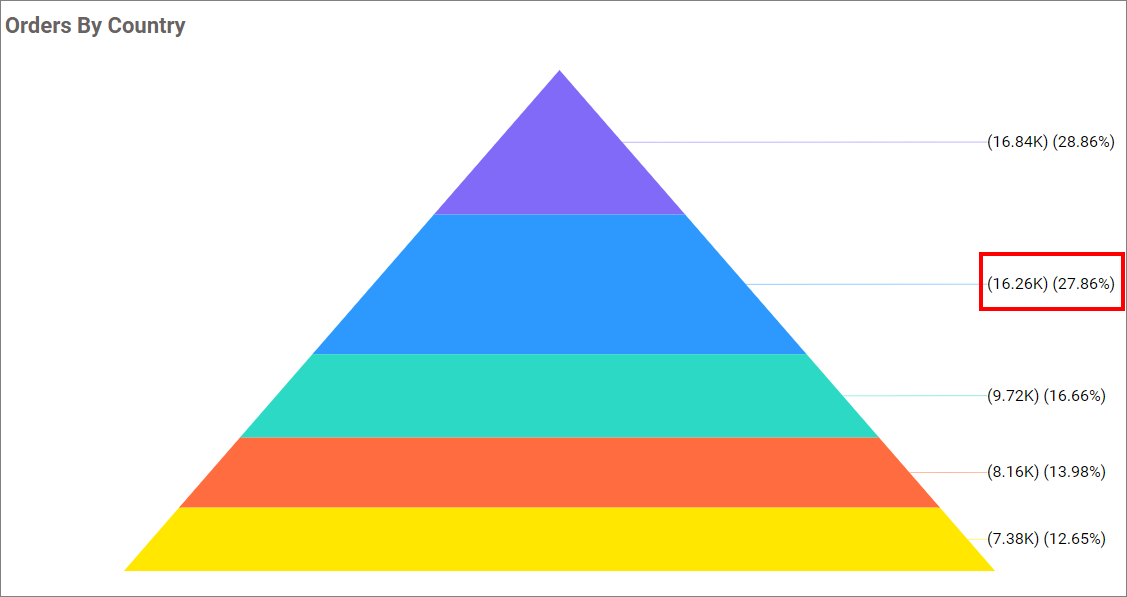
All details
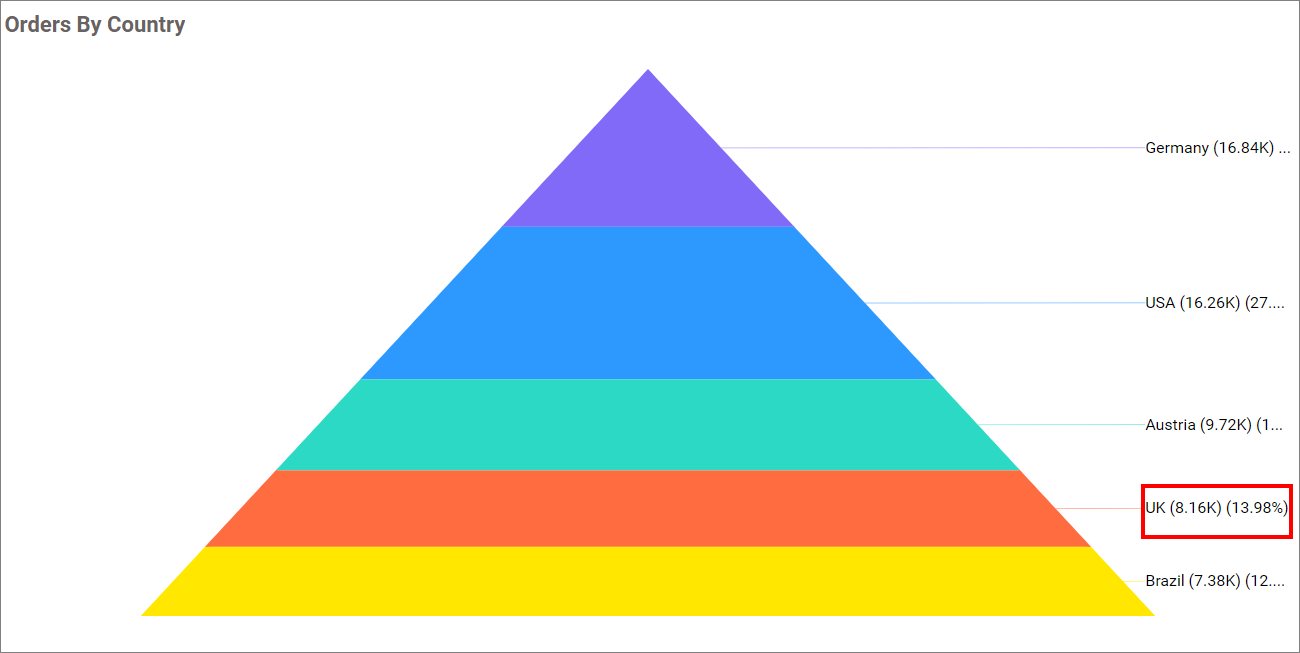
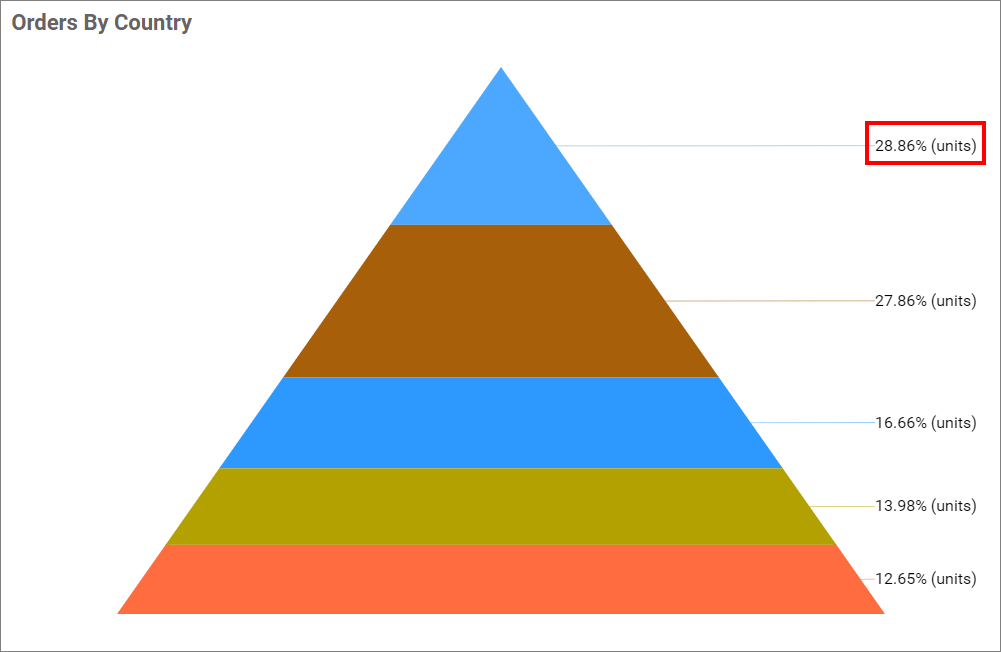
Value labels suffix
This allows you to show/hide the suffix value of value labels.
Suffix Value
This allows you to customize the suffix value of value labels.
Series Settings
The Series Settings option is enabled only when you configure the series in the Assigned Data tab.
Fixed rows and columns
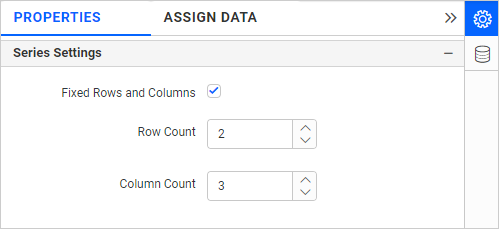
If you enable fixed rows and columns, you can customize the rows and columns. The rows and columns are fixed based on the container size and size of the pyramid chart.
Row count
By enabling the Row Count, you can set the count of the rows.
Column count
By enabling the Column Count, you can set the column count.
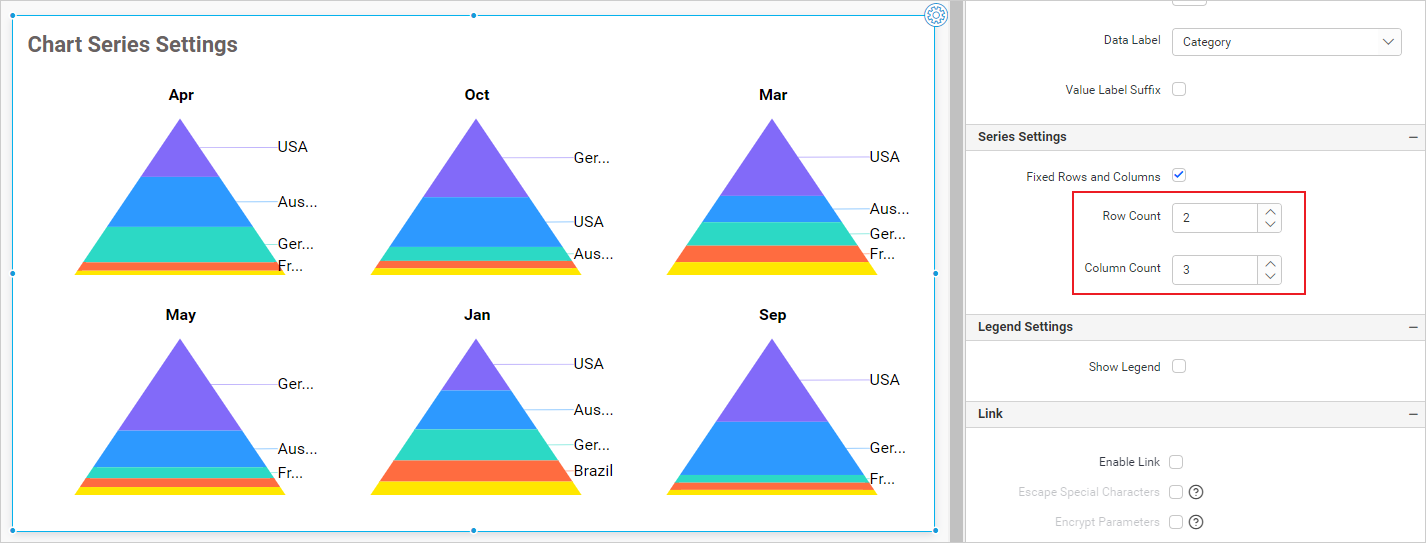
Note: If the invalid columns and rows are given, the rows and columns reset to their default value. For example, if you are given the number of rows as 6 and the number of columns as 5 but your data count is only 20. In this case, the rows and columns will reset to their default value.
Tooltip Settings
The Tooltip Settings section allows you to customize the appearance and behavior of tooltips in widget visualizations.
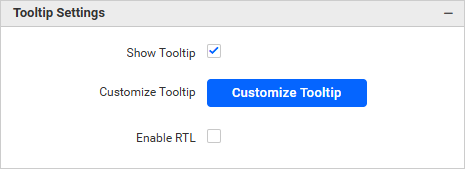
Show Tooltip
This option allows you to toggle the visibility of the tooltip in the pyramid chart.
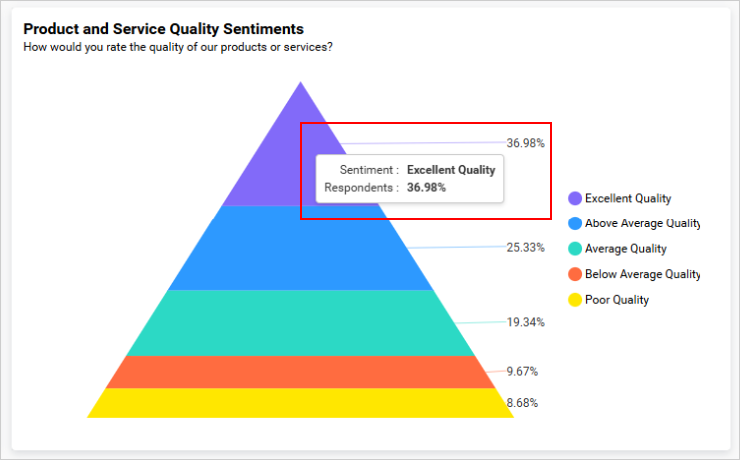
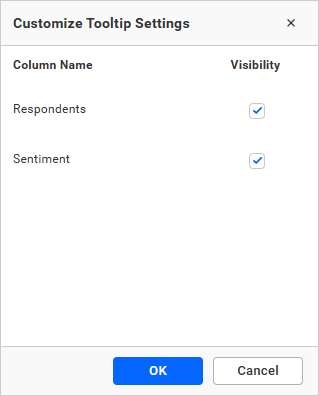
Customize Tooltip
This option allows you to customize which columns are visible in the chart’s tooltip.
Enable RTL
This option allows you to display fields and their data from right to left.
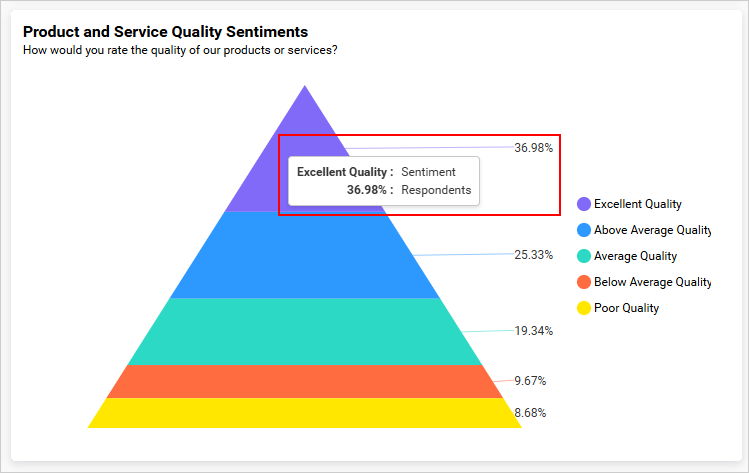
Legend Settings
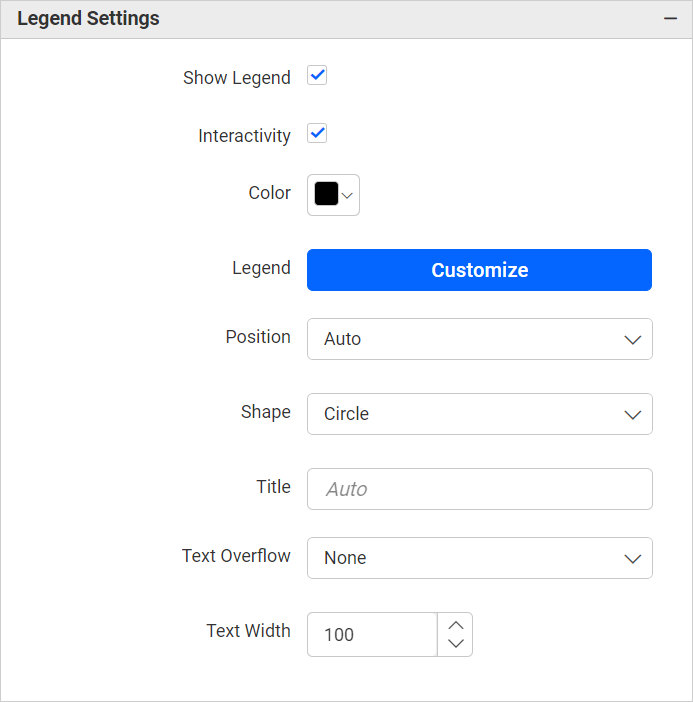
Show legend
A legend is text used to describe the plotted data. It allows you to toggle the visibility of the legend in the chart and change the legend text position by selecting through a combo box.
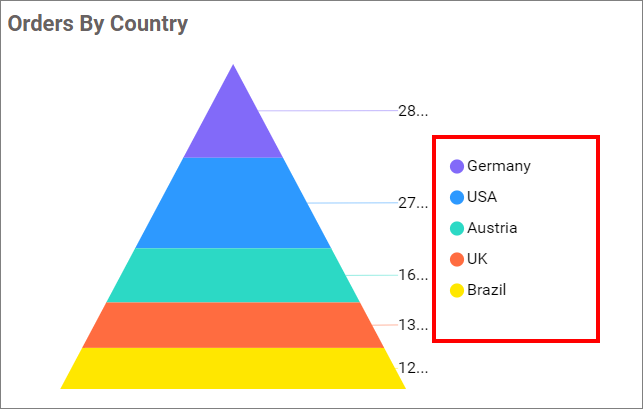
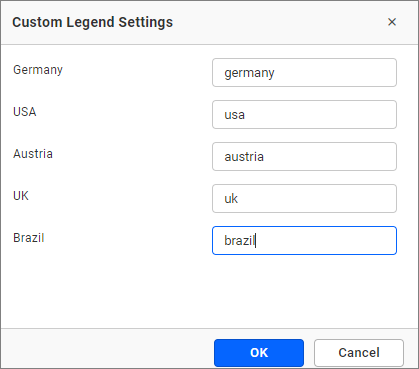
Enabling the Custom Legend Text option will allow you to define a custom text (through the text area) to display for each legend series (selecting through the combo box) in the chart.
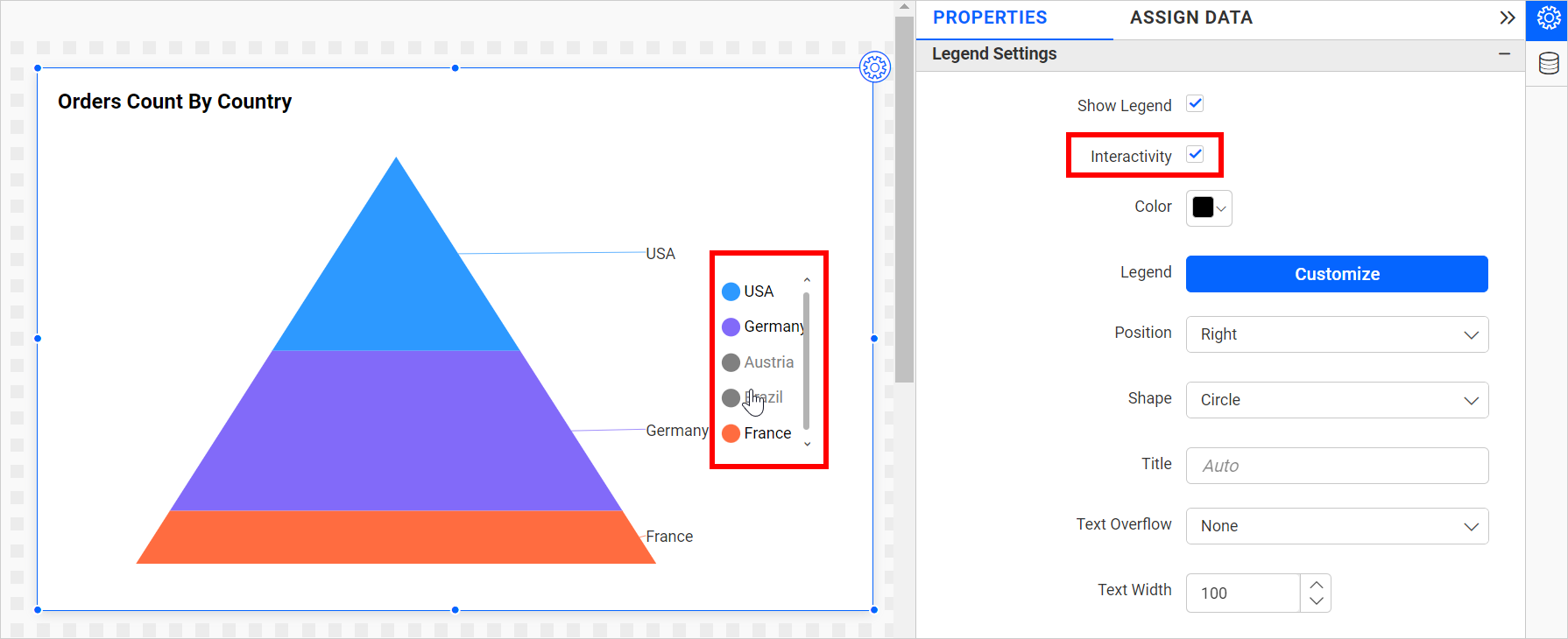
Legend Interactivity
The chart legend interactivity option allows you to control the behavior of the chart legends. This provides an option to make chart legends non-clickable, which can be especially useful in scenarios where you do not want users to hide or show series data by clicking on the legend. This might also be useful when displaying critical pieces of data that should always be present for accuracy and context purposes.
Disabling the Interactivity feature in the Legend Settings category does not allow you to click on the legends.
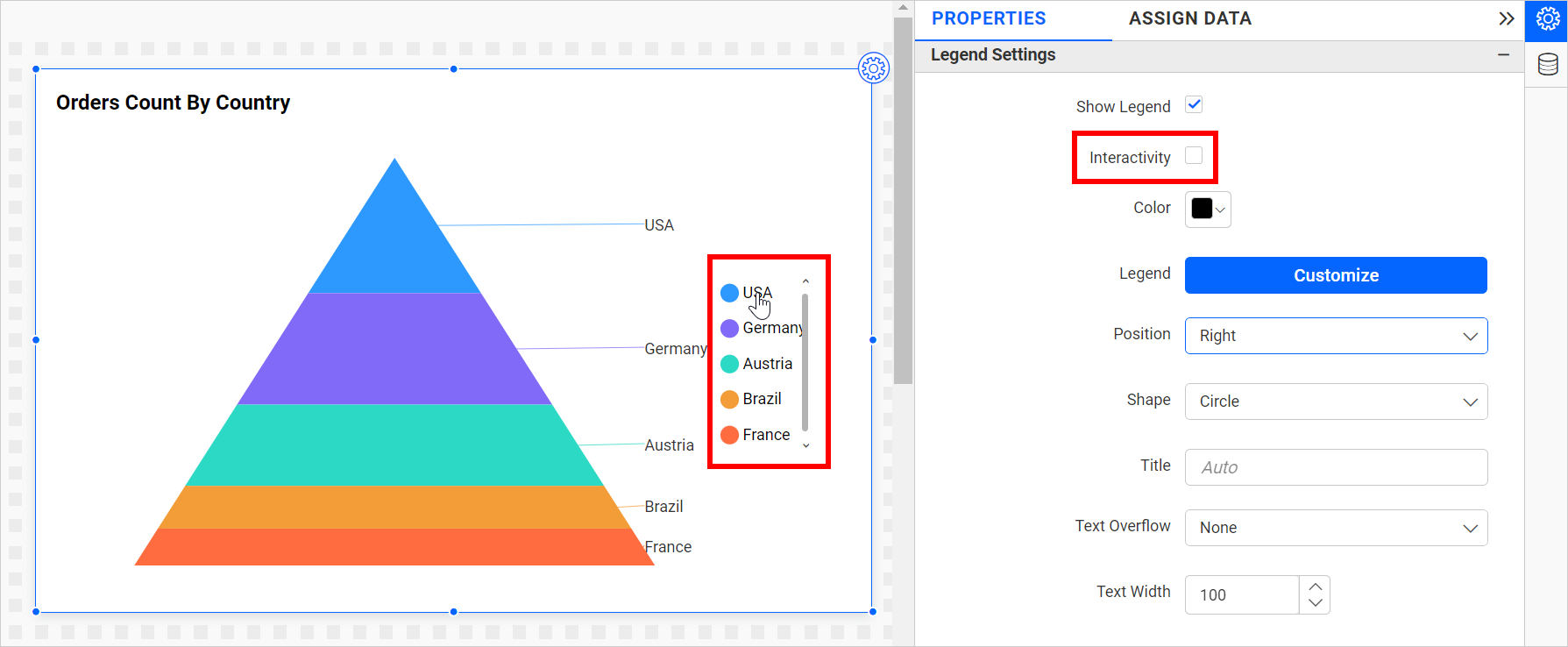 Enabling the Interactivity feature in the Legend Settings category allows you to click on the legends
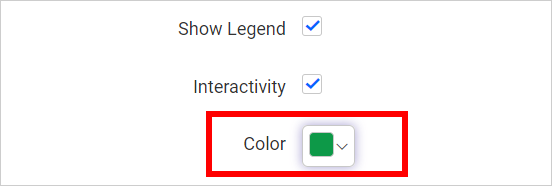
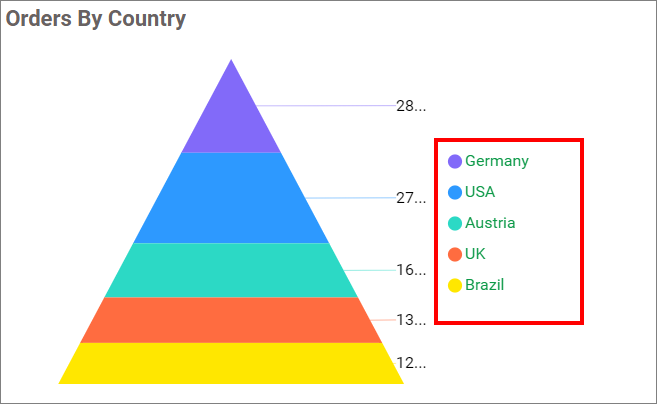
Legend Label Color
This feature allows you to change the chart legend title and label colors.
Customize
You can customize the legend text through the Custom Legend Settings dialog. This dialog will show the legend text list as labels at the left and corresponding text area at the right to add the formatted text to display instead.
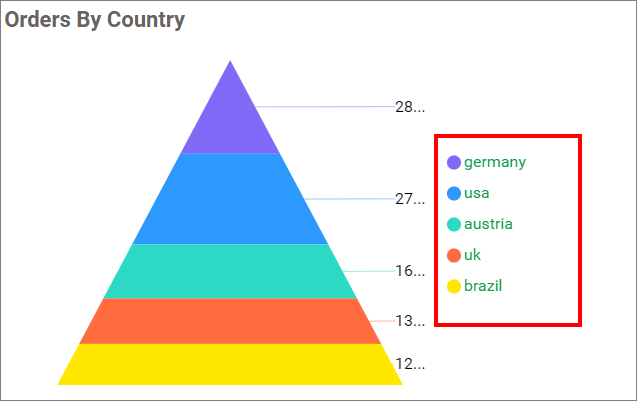
Legend Position
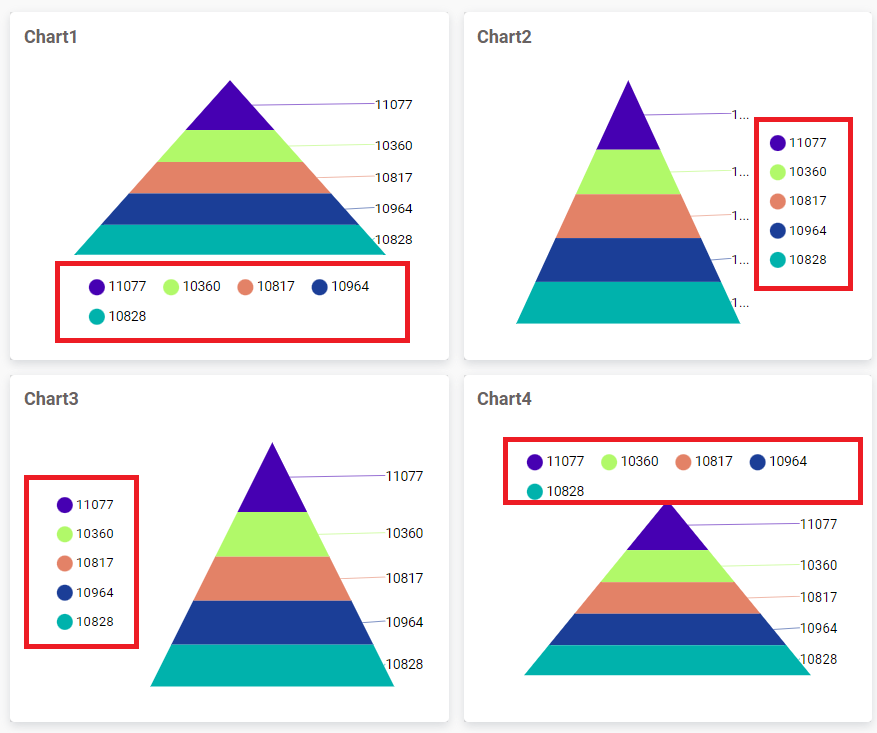
A Legend is a text used to describe the data plotted. This option allows you to place the legend at the position of Left, Right, Top, and Bottom.
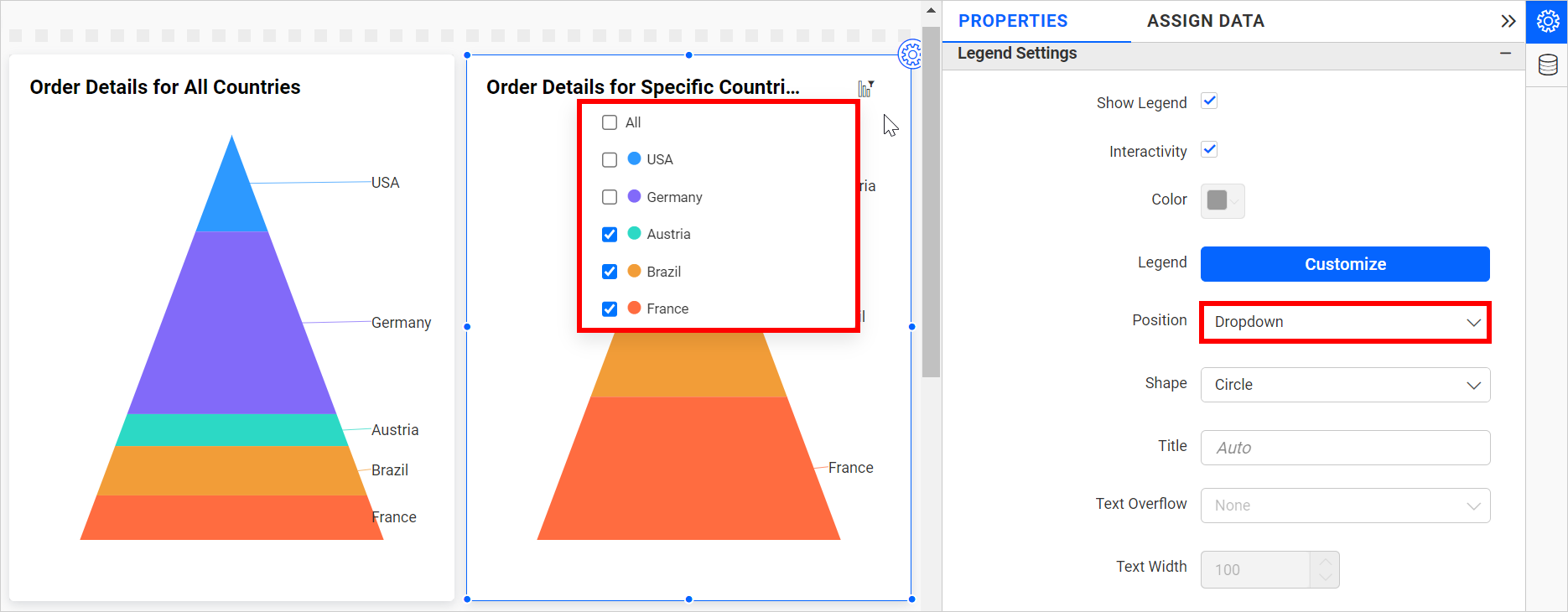
Legend Item as Dropdown
Legends can be displayed as a dropdown menu when the legend position is set to “dropdown.” When you hover over a chart, a legend icon appears. Clicking on this icon will bring up a legend dropdown. This feature allows you to toggle the visibility of the legend in the chart.
This option will hide the legends in the chart area, resulting in increased chart space and enhanced visibility.
The chart legend dropdown option can be used to simplify viewing complex charts with multiple data sources. For example, if you have a chart displaying sales data for the different years, you can use the legend dropdown to deselect all other years and focus only on a specific year.
Legend Alignment
Legend Alignment enables you to control how the legend is positioned within its allocated space. For detailed guidance, refer to the Legend Alignment section.
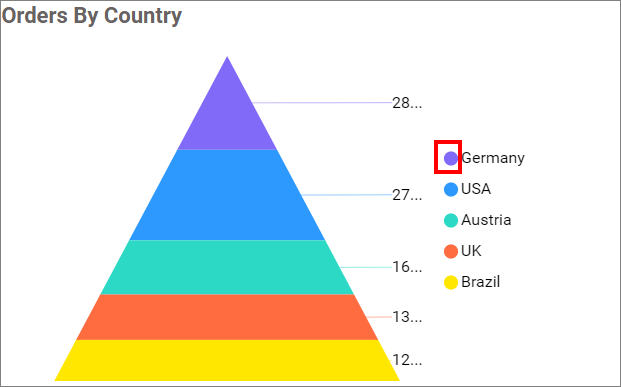
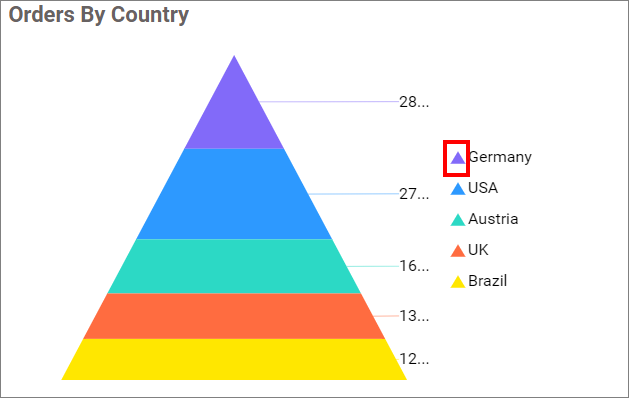
Legend Shape
This feature allows you to change the shape of the legend.
Circle
This option allows you to change the shape of the legend to a Circle.
Series Type
This option allows you to change the shape of the legend for Series.
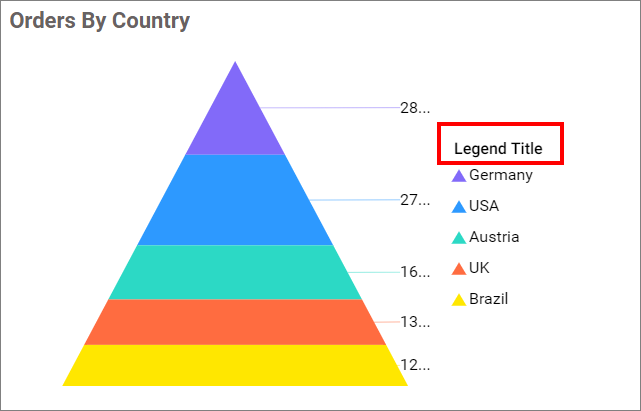
Legend Title
This feature allows you to add the legend title for the chart. It will reflect with the Show Legend.
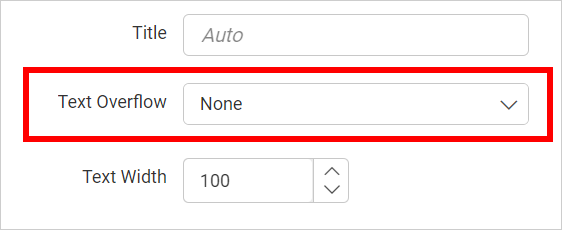
Text Overflow
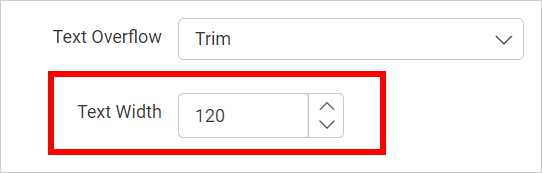
This feature allows you to customize legend text based on the Text Width property value.
None
This option allows you to render legend items without any wrap and trim.
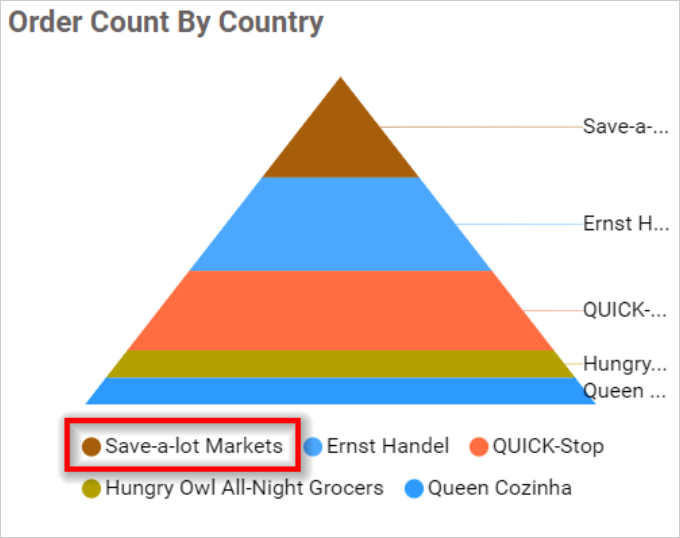
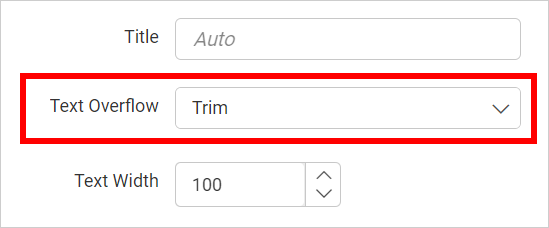
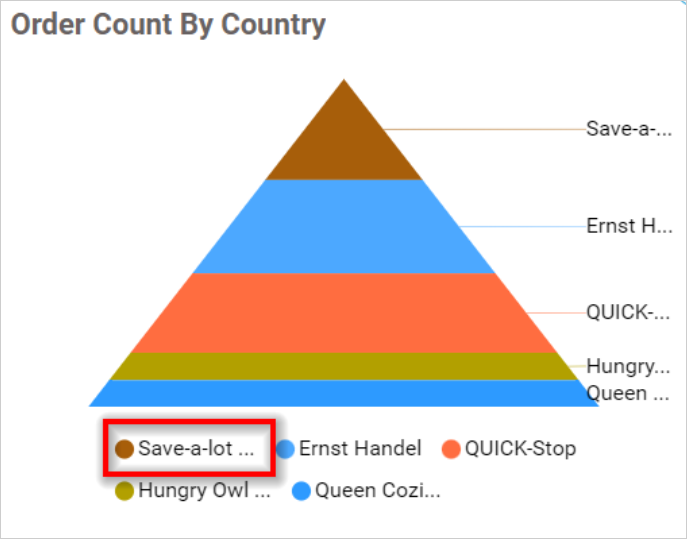
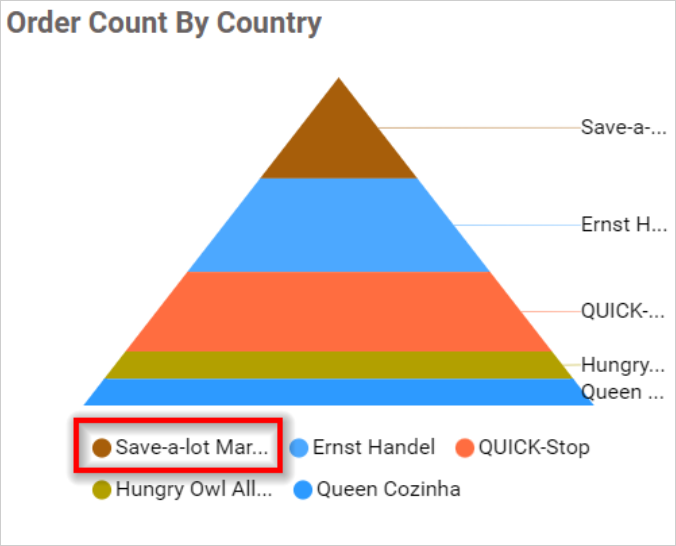
Trim
This option allows you to trim the legend items if the legend exceeds the Text Width value.
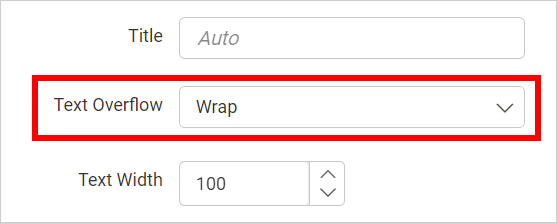
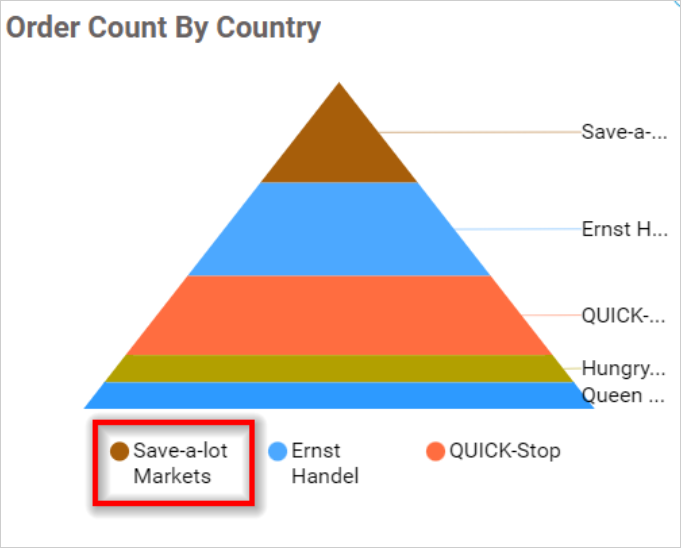
Wrap
This option allows you to wrap legend items based on the ‘Text Width’ value.
Text Width
This option allows you to set the maximum width for the Legend Items and is applicable only if text overflow is set as Trim or Wrap.
If you uncheck the Show Legend property in the property panel, the dependent properties Legend color, Legend position, customization button, and Legend title are also hidden.
Link
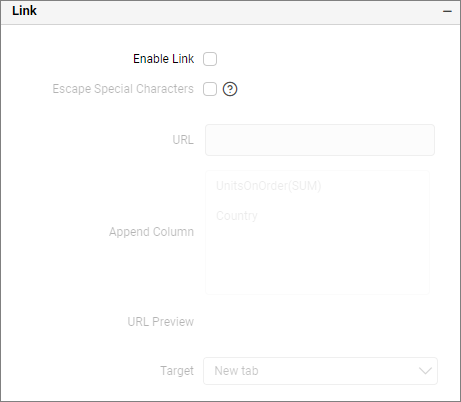
You can enable linking and configure navigating to a general URL with or without parameters. For more details, refer to the Linking.
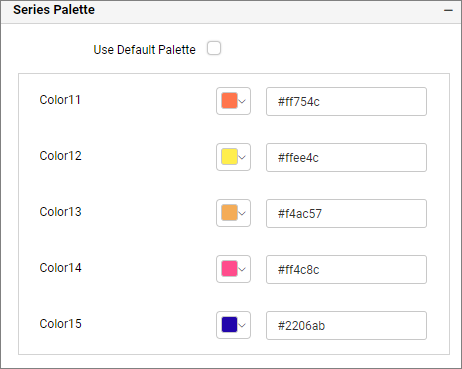
Series palette
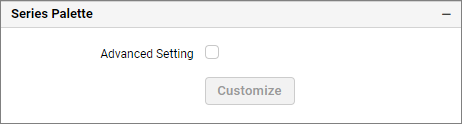
By toggling the series palette, you can customize the proportion series segments’ colors.
Based On
You can choose the field from the Based On section to apply the conditions.
This section shows a palette of colors. By clicking the colored square, the color picker will open. You can choose a color and change the color by changing the corresponding hexadecimal value on the right.
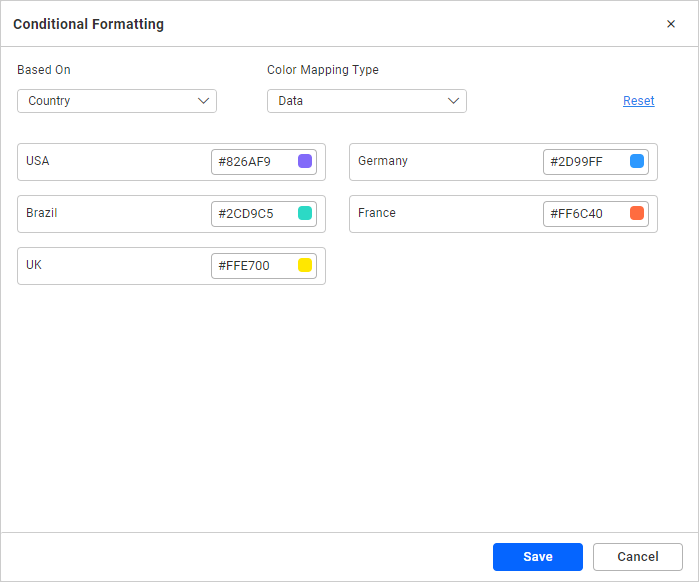
Color Mapping Type
Using the Color Mapping type, you can apply the colors to the series based on data or index.
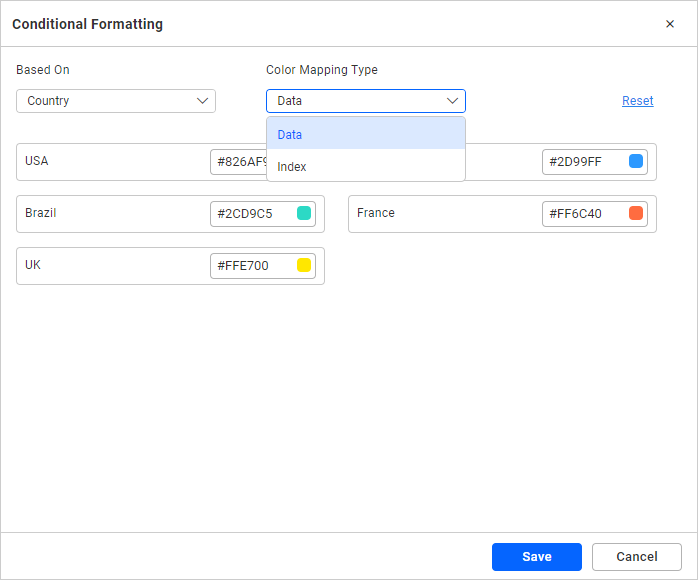
Data
Data allows you to apply color for chart series based on data. If you want to apply a specific color to specific data, you can use Data based color mapping. By default, the Color Mapping Type will be Data.
IMPORTANT: Only the top 100 records will be listed in the dialog.
Index
It allows you to apply color for chart series based on Index. Such that the colors are maintained based on index even if data is changed. It shows only 15 different colors. After that, the color will be repeated from above colors.
For example, If you are displaying the countries based on the increasing order of the case count, then the index-based color mapping will be useful to set the colors based on the rank. Say red color to the top, then the red color will be maintained for the country having the largest case count.
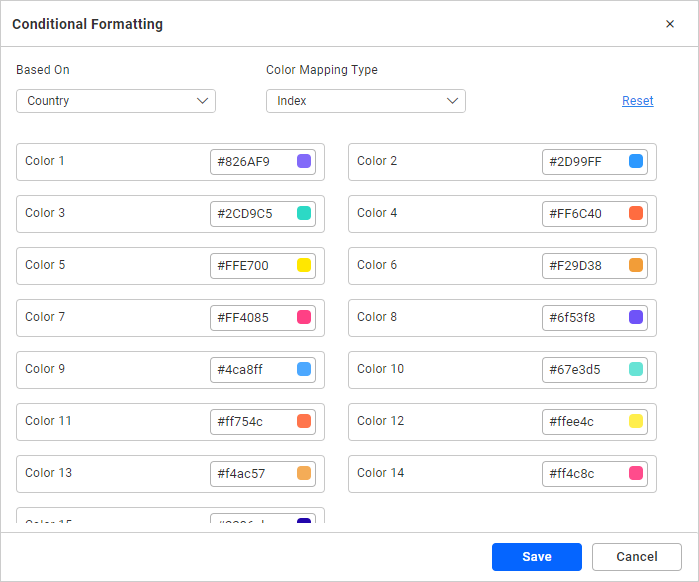
Note: We prefer to use Index based color customization only for a minimum of data (up to 15 series).
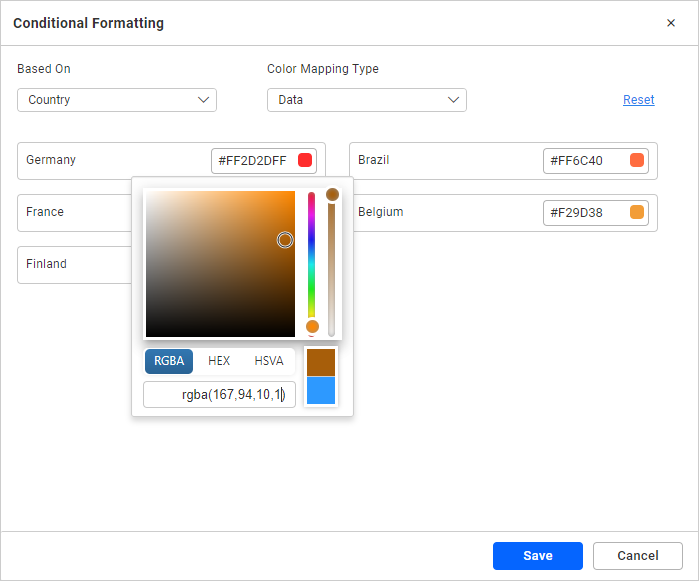
Use Default Palette
This option shows when you add more than one measure field to the Value(s).
By toggling off the Use Default Palette, you can customize the proportion series segments’ colors by clicking the colored squares.
Font settings
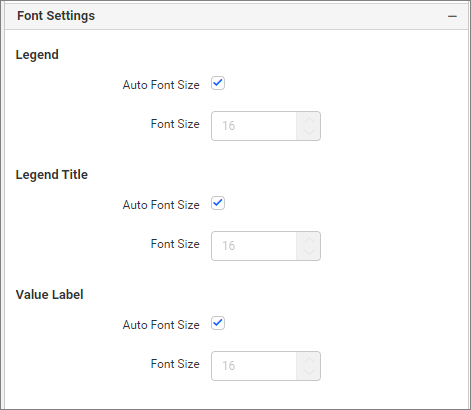
This section allows you to customize the font size of the chart elements.
Filter
Act as master widget
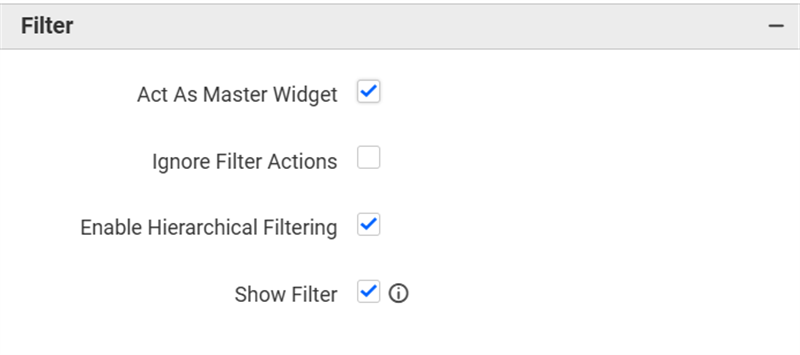
Define the Pyramid Chart widget as a master widget such that its filter action will be shown in other widgets of the dashboard.
Ignore filter actions
Define the Pyramid Chart widget to ignore the filter actions applied to other widgets in the dashboard.
Hierarchical filter
Through this option, you can enable or disable hierarchical Top N filtering. While applying the Top N filter with multiple dimension columns, the data returned can be customized based on whether the filtering needs to be done as flat or based on the hierarchy of added dimension columns.
When the hierarchical filter option is enabled, the Top N filter will be applied for each individual column separately based on the number set for each column.
Show Filter
This feature allows you to toggle the visibility of the Filter icon for the pyramid chart widget when the Act as Master Widget option is enabled.
Container Appearance
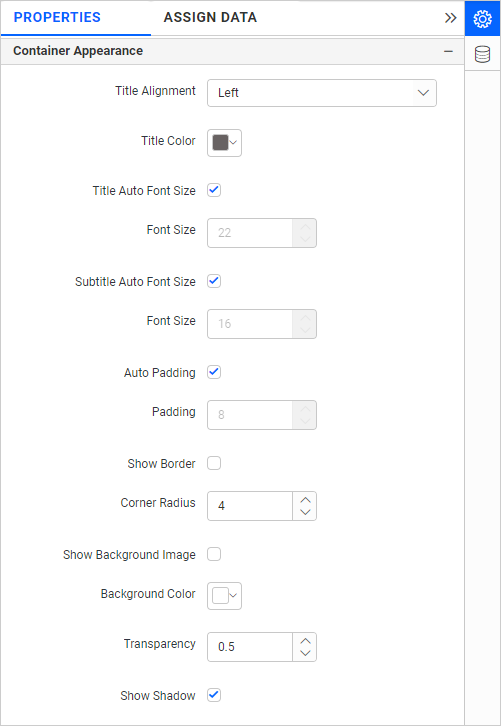
Title Alignment
This allows you to handle the alignment of the widget title to either left, center, or right.
Title Color
This allows you to apply the text color to the widget title.
Title Auto Font Size
On enabling Auto Font Size, the font size of the title will be adjusted automatically if the resolution of the screen varies.
Font Size
This allows you to apply the specified size of the font to the widget title if the Title Auto Font Size is disabled. Value can be between 10 and 44.
Subtitle Auto Font Size
On enabling Auto Font Size, the font size of the subtitle will be adjusted automatically if the resolution of the screen varies.
Font Size
This allows you to apply the specified size of the font to the widget title if the Subtitle Auto Font Size is disabled. The value can be between 10 and 32.
Auto Padding
On enabling Auto Padding, the padding of the widget container will be adjusted automatically if the size of the widget varies.
Padding
This allows you to customize the padding of the widget container if the Auto Padding is disabled. The value can be between 0 and 25.
Show Border
This allows you to toggle the visibility of the border surrounding the widget.
Corner Radius
This allows you to apply the specified radius to the widget corners if the Show Border is enabled. The value can be between 0 and 100.
Show Background Image
This allows you to set the background image for the pyramid chart widget.
Background Color
This allows you to set the background color for the pyramid chart widget.
Transparency
This property allows you to specifies the transparency for the background color.
Show Shadow
This allows you to toggle the visibility of the shadow surrounding the widget.
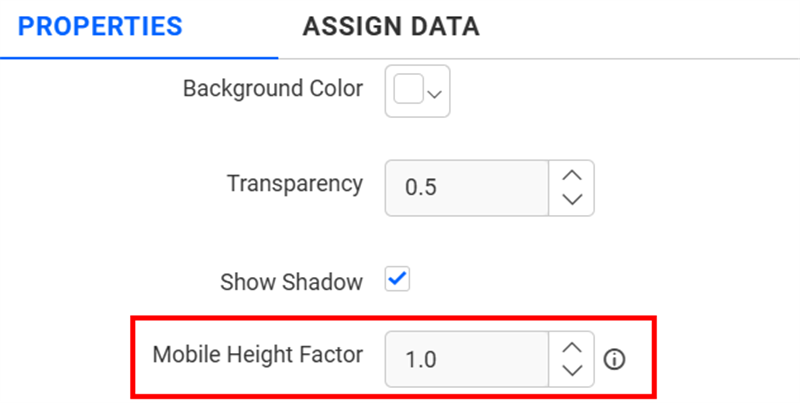
Mobile Height Factor
This option allows you to resize widgets specifically for mobile view.
Container actions
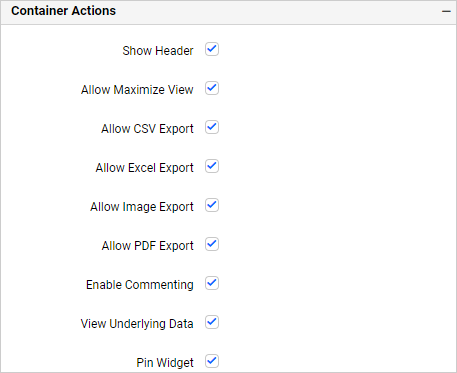
Show Header
This allows you to enable or disable the widget title of the pyramid chart.
Allow Maximize View
This allows you to enable or disable the maximized mode of the pyramid chart widget. The visibility of the maximize icon in the widget header will be defined based on the setting in the viewer.
Allow CSV Export
This allows you to enable or disable the CSV export option for the pyramid chart widget. Enabling this allows you to export the summarized data of the widget view to CSV format in the viewer.
Allow Excel Export
This allows you to enable or disable the Excel export option for the pyramid chart widget. Enabling this allows you to export the summarized data of the widget view to (.xlsx or .xls) format in the viewer.
Allow Image Export
This allows you to enable or disable the Image export option for the pyramid chart widget. Enabling this allows you to export the view of the widget to image format (.jpg), (.png), or (.bmp) in the viewer.
Allow PDF Export
This allows you to enable or disable the PDF export option for the pyramid chart widget. Enabling this allows you to export the view of the widget to pdf format in the viewer.
Enable Comments
This allows you to enable or disable comment for the dashboard widget. For more details, refer to the Commenting Widget.
Allow View Underlying Data
This allows you to visualize the raw data associated with a widget at runtime.
To learn more about viewing the underlying widget data, refer to the view data documentation.
Pin Widget
This allows you to pin the widget.