Generating Time Intervals and Transforming Data Using Bold Data Hub
In this article, we will demonstrate how to import tables from a CSV file, generate time intervals through transformations, and migrate the cleaned data into the destination database using Bold Data Hub. Follow the step-by-step process below.
Sample Data Source:
Creating Pipeline
Learn about Pipeline Creation
Applying Transformation
-
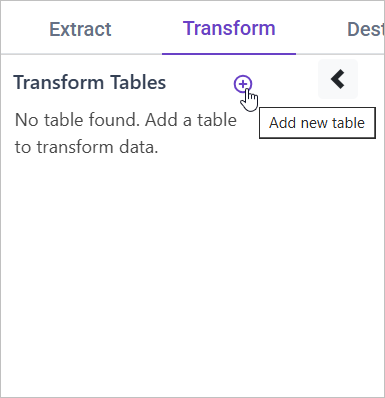
Go to the Transform tab and click Add Table.
-
Enter the table name to create a transform table for customer satisfaction summary.
Note: The data will initially be transferred to the DuckDB database within the designated {pipeline_name} schema before undergoing transformation for integration into the target databases. As an illustration, in the case of a pipeline named “customer_service_data”, the data will be relocated to the customer_service_data table schema.
Learn more about transformation here
Generating Time Intervals
Overview
Categorizing service request response times helps in performance analysis and identifying efficiency gaps. We classify response times into predefined thresholds:
- “Fast” → Resolved within 1 day
- “Medium” → Resolved within 3 days
- “Slow” → Resolved after 3 days
Approach
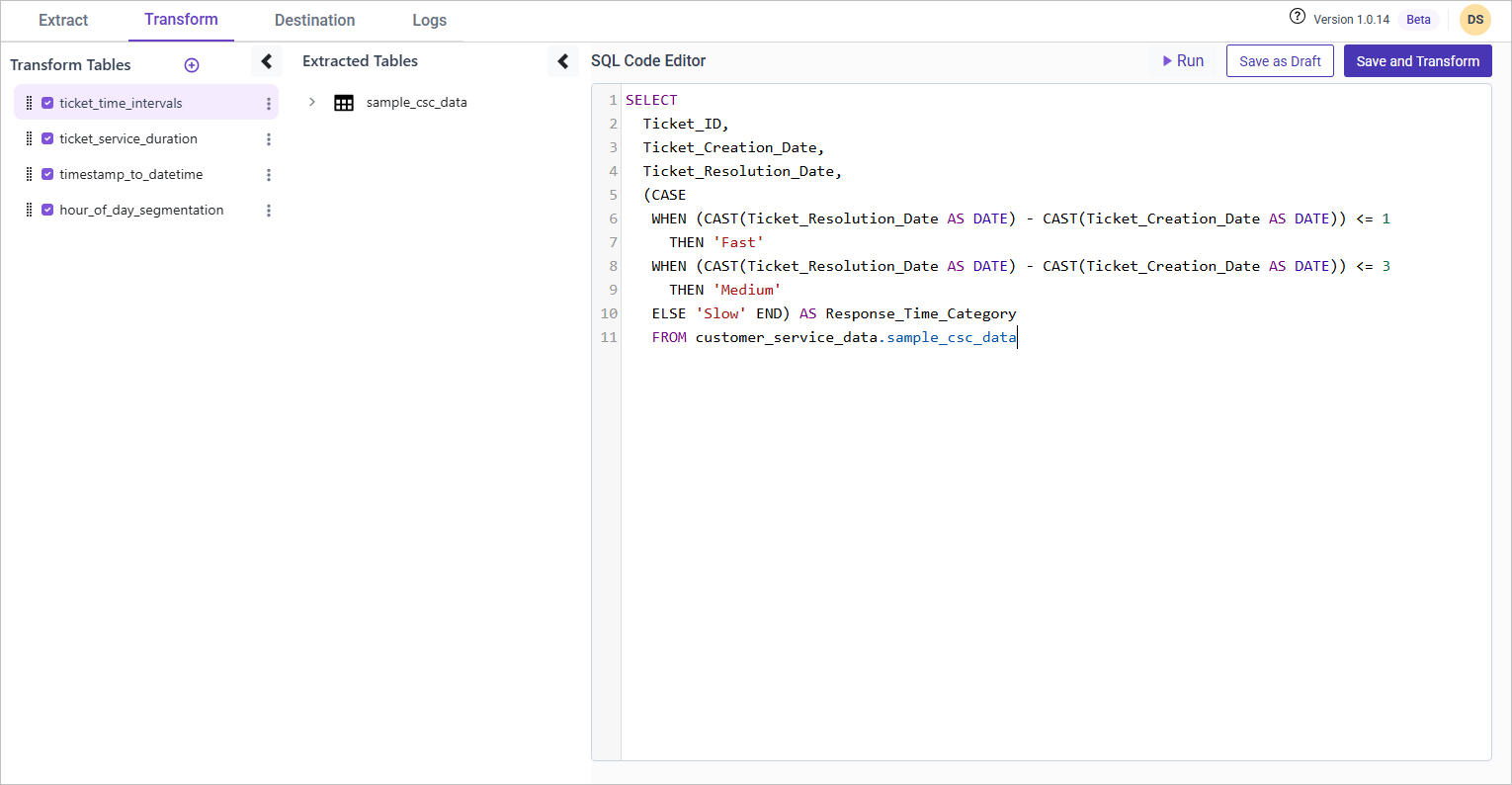
We use a CASE statement to categorize response times based on the difference between ticket creation and resolution dates.
SQL Query for Generating Time Intervals
SELECT
    Ticket_ID,
    Ticket_Creation_Date,
    Ticket_Resolution_Date,
    CASE
        WHEN (CAST(Ticket_Resolution_Date AS DATE) - CAST(Ticket_Creation_Date AS DATE)) <= 1 THEN 'Fast'
        WHEN (CAST(Ticket_Resolution_Date AS DATE) - CAST(Ticket_Creation_Date AS DATE)) <= 3 THEN 'Medium'
        ELSE 'Slow'
    END AS Response_Time_Category
FROM {pipeline_name}.sample_csc_data;